
The Autonomous Advantage: Turning Permanent Disruption into Competitive Edge
Speakers Include:


Mark Holmes


Bob Celeste


Miguel Ordonez

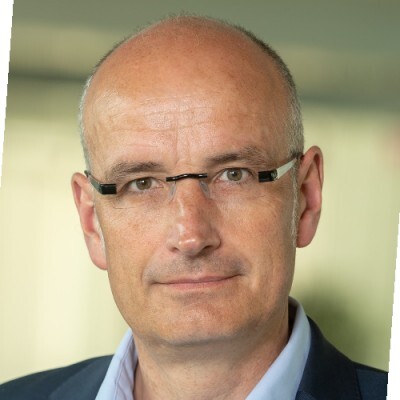
Thomas Panzer


Johnny Ivanyi


Shannon Vaillancourt

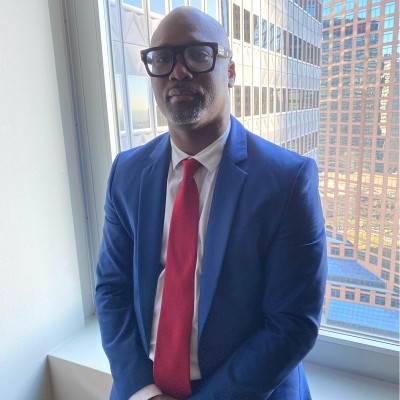
Jamie Green

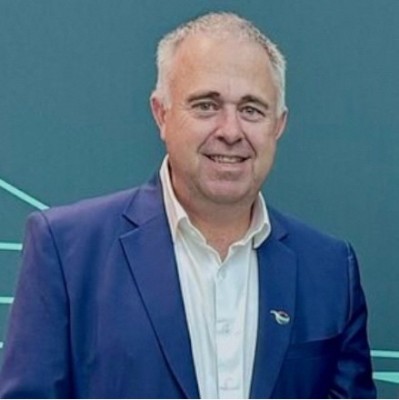
Matthew Roberts

Mike Peluso
Agenda
9:00am - 9:15am
MOC Opening
9:15am - 10:00am
Industry Panel
Building The Supply Chain of the Future: Autonomous, Intelligent and Commercially Integrated
This panel moves past the pilot headlines to the operational reality: which decisions are genuinely ready to be handed to a system, which still need a human in the loop, and what "commercially integrated" looks like when supply chain stops reporting to the business and starts running alongside it. The value for delegates is a straight read on pace: a benchmark of where real organizations sit on the autonomy curve against where the market claims they sit, and an early warning on the gap between the two. Outcomes: a working checklist for separating a genuine autonomous win from an expensive pilot, and language to bring back to the board on what "commercially integrated" supply chain should mean for next year's plan. Delegates are polled live on where their own organization sits on the curve, and panel questions are opened to the floor throughout.



10:00am - 11:00am
Workshop Tracks
Track 1: Designing the Autonomous Supply Chain: From AI Co-Pilot to Autonomous Decision Execution
The first wave of AI in supply chain made recommendations; the second wave is starting to act on them. Agentic AI has moved from analyst slideware to live deployment, with autonomous agents now rebalancing inventory, re-routing shipments and executing procurement decisions inside real supply chains, and the leaders piloting it are reporting a step change in speed that manual exception management can't match. But the gap between a co-pilot that suggests and a system that decides is not primarily technical. It's a question of trust, governance and design: which decisions do you hand over first, what guardrails and escalation paths keep humans meaningfully in command, and how do you re-skill a planning organisation whose job is shifting from making decisions to supervising the systems that make them?
In this in-depth, interactive workshop, supply chain leaders across verticals will map the practical route from decision support to decision execution. Working under the Chatham House Rule, participants will benchmark where their peers really are on the autonomy curve (as opposed to where the vendor decks claim the market is), work through frameworks for deciding which decisions to automate first based on value, risk and reversibility, and stress-test the governance models that make autonomy defensible to boards, auditors and regulators. You will leave with a realistic maturity map for your own organisation, a shortlist of high-value, low-regret candidates for autonomous execution, and the design principles that separate the early wins now emerging from the expensive false starts.
Track 2: Supply Chain Transparency & Traceability: How to Build Trust Across Multi-Tier Global Networks
An in-depth workshop focused on visibility past tier one: most networks can see their direct suppliers and go dark beyond that, which is exactly where tariff exposure, compliance risk and reputational risk now concentrate. The value is a structured way to close that gap without rebuilding the data estate from scratch. Outcomes: a practical model for prioritizing which sub-tier relationships need traceability first, the data-sharing and verification mechanics that make multi-tier visibility stick rather than decay after the project ends, and the trust-building steps that get suppliers to participate rather than resist. Delegates work through their own network's blind spots in a facilitated exercise and compare notes with peers across verticals in the room.

11:15am - 12:00pm
Visionary Implementation Interview
One Company, One Supply Chain: Standardising a $70bn Food Enterprise for the Agentic Era
A conversation on Cargill's move from autonomy to alignment: embedding standard work across a global food supply chain, operating as one company, and putting AI capability into your teams' hands to drive efficiency without creating chaos.
Built through decades of acquisition, Cargill's $70bn food enterprise grew up with autonomy in its DNA — 19 businesses, 77 countries, and as many ways of working. Debbie Lang, VP Global Supply Chain, is helping to change that trajectory: leading a workstream in a company-wide management system — modelled on the disciplines that have served P&G and Toyota for a generation — to move Cargill from customisation to standard work, and from a federation of business units to a single company that serves its customers in a common way.
In this keynote interview, Debbie shares what it takes to embed standardisation at scale across planning, delivery, procurement, quality, safety and asset reliability — and how that same "one company" thinking is shaping Cargill's approach to AI. As she puts it, the challenge is putting capability into team members' hands to innovate and drive efficiency, without solving the same problem nineteen different times. Expect a candid, cross-industry conversation on operating models, the human side of change, and how to build a supply chain that can thrive in an age of continuous disruption.
12:00pm - 12:30am
Visionary Adoption Interview
The Truly Agentic Supply Chain: How to Deliver AI Enabled Decision Intelligence
In this keynote interview we'll focus in on the gap between knowing and deciding: most supply chains are not short of data, they are short of decisions made in time to matter, and that gap is where service levels, working capital and resilience quietly leak away. The value is a concrete look at what decision intelligence adds on top of a standard control tower: a live, unified view of the network that recommends and prioritizes rather than simply reporting what has already gone wrong. Outcomes: a framework for judging where autonomy makes sense today and where it doesn't yet, and the underlying conditions, data quality, governance and trust, that have to be true before a system earns the right to act. Delegates put questions to the discussion directly and are polled on their own organization's current decision lag.

1:00pm - 2:00pm
Roundtable Tracks
Track 1: From Plan-Driven to Decision-Driven: Scaling AI-Powered Supply Chain Planning Across the Enterprise
Interactively and collaboratively explore the shift from a plan that gets revisited periodically to a plan that updates itself against live signals, and what it takes to scale that beyond a single pilot team to the whole planning function. The value is a grounded view of what "decision-driven" planning changes operationally: cadence, ownership and the skills a planning team needs once its job shifts from building the plan to supervising the system that rebuilds it. Outcomes: a set of criteria for judging planning-AI vendors and pilots against enterprise scale rather than demo scale, and a realistic view of the organizational change required to get there. The roundtable format puts every delegate's own scaling blocker on the table for group discussion rather than a single case study.
Track 2: End-to-End Supply Chain Orchestration: Connecting Planning, Procurement, Manufacturing and Logistics into a Single Operating System
Interactively and collaboratively explore the cost of four functions running on four separate systems of record, and what genuine end-to-end orchestration looks like once they are connected. The value is a clear-eyed look at where the real friction sits, usually the handoffs rather than the individual functions, and what closing those handoffs is actually worth. Outcomes: a practical lens for mapping the delegate's own organization's handoff points, and the sequencing logic for which connection to tackle first for the fastest return. Delegates bring their own orchestration gaps into an open, peer-led discussion rather than listening to a single vendor narrative.
2:00pm - 5:25pm
1:1 Meetings
A series of curated 30-minute meetings scheduled throughout the three-hour networking period, with breaks between sessions. Matches are arranged based on intelligence-led recommendations and mutual business interests.
9:00am - 9:15am
MOC Opening
9:15am - 10:00am
Industry Panel
Supply Chain Resilience Architecture: Building Networks That Withstand Geopolitical and Tariff Volatility
In this keynote panel discussion we'll explore resilience as a design question rather than a reaction: how networks are being rebuilt now, in the moment, to absorb the next tariff change or trade shock rather than scramble after it lands. The value for delegates is a comparison of resilience strategies actually in motion across verticals, logistics, sourcing, manufacturing, rather than the generic "diversify your suppliers" advice most of the market is still offering. Outcomes: a framework for stress-testing the delegate's own network against plausible geopolitical and tariff scenarios, and a clearer read on where redundancy is worth paying for versus where it is just cost with no resilience benefit. The panel runs with live audience polling on exposure and open floor questions throughout.

10:00am - 11:00am
Workshop Tracks
Track 1: Designing the Autonomous Supply Chain: From AI Co-Pilot to Autonomous Decision Execution
The first wave of AI in supply chain made recommendations; the second wave is starting to act on them. Agentic AI has moved from analyst slideware to live deployment, with autonomous agents now rebalancing inventory, re-routing shipments and executing procurement decisions inside real supply chains, and the leaders piloting it are reporting a step change in speed that manual exception management can't match. But the gap between a co-pilot that suggests and a system that decides is not primarily technical. It's a question of trust, governance and design: which decisions do you hand over first, what guardrails and escalation paths keep humans meaningfully in command, and how do you re-skill a planning organisation whose job is shifting from making decisions to supervising the systems that make them?
In this in-depth, interactive workshop, supply chain leaders across verticals will map the practical route from decision support to decision execution. Working under the Chatham House Rule, participants will benchmark where their peers really are on the autonomy curve (as opposed to where the vendor decks claim the market is), work through frameworks for deciding which decisions to automate first based on value, risk and reversibility, and stress-test the governance models that make autonomy defensible to boards, auditors and regulators. You will leave with a realistic maturity map for your own organisation, a shortlist of high-value, low-regret candidates for autonomous execution, and the design principles that separate the early wins now emerging from the expensive false starts.
Track 2: Supply Chain Transparency & Traceability: How to Build Trust Across Multi-Tier Global Networks
An in-depth workshop focused on visibility past tier one: most networks can see their direct suppliers and go dark beyond that, which is exactly where tariff exposure, compliance risk and reputational risk now concentrate. The value is a structured way to close that gap without rebuilding the data estate from scratch. Outcomes: a practical model for prioritizing which sub-tier relationships need traceability first, the data-sharing and verification mechanics that make multi-tier visibility stick rather than decay after the project ends, and the trust-building steps that get suppliers to participate rather than resist. Delegates work through their own network's blind spots in a facilitated exercise and compare notes with peers across verticals in the room.
11:15am - 12:00pm
Visionary Implementation Interview
Separation by Design: Rebuilding a Logistics Network for Service, Cost and Resilience
What does day one look like when one supply chain has to become two? This keynote interview follows a live separation of consumer and pharma logistics under private equity ownership, from the network analysis and last mile control tower to a rewritten tender that is beating its cost to serve target. Expect a candid account of buying capability, AI included, from lead logistics providers, and the lessons from absorbing an acquisition along the way.
12:00pm - 12:30pm
Workshop Recap and Overview
1:00pm - 2:00pm
Roundtable Tracks
Track 1: From Plan-Driven to Decision-Driven: Scaling AI-Powered Supply Chain Planning Across the Enterprise
Interactively and collaboratively explore the shift from a plan that gets revisited periodically to a plan that updates itself against live signals, and what it takes to scale that beyond a single pilot team to the whole planning function. The value is a grounded view of what "decision-driven" planning changes operationally: cadence, ownership and the skills a planning team needs once its job shifts from building the plan to supervising the system that rebuilds it. Outcomes: a set of criteria for judging planning-AI vendors and pilots against enterprise scale rather than demo scale, and a realistic view of the organizational change required to get there. The roundtable format puts every delegate's own scaling blocker on the table for group discussion rather than a single case study.
Track 2: End-to-End Supply Chain Orchestration: Connecting Planning, Procurement, Manufacturing and Logistics into a Single Operating System
Interactively and collaboratively explore the cost of four functions running on four separate systems of record, and what genuine end-to-end orchestration looks like once they are connected. The value is a clear-eyed look at where the real friction sits, usually the handoffs rather than the individual functions, and what closing those handoffs is actually worth. Outcomes: a practical lens for mapping the delegate's own organization's handoff points, and the sequencing logic for which connection to tackle first for the fastest return. Delegates bring their own orchestration gaps into an open, peer-led discussion rather than listening to a single vendor narrative.
2:00pm - 5:25pm
1:1 Meetings
A series of curated 30-minute meetings scheduled throughout the three-hour networking period, with breaks between sessions. Matches are arranged based on intelligence-led recommendations and mutual business interests.
Who attends
Register interest

Thank you for your interest. One of the team will be in touch soon.
Why attend?
Connect with like-minded senior leaders for a curated agenda, focused on tackling your current business critical challenges and driving industry forward.
Be a part of exclusive shared learning, horizon scanning and actionable insights enabling organizations to deliver transformative strategies.
Build meaningful relationships with solution providers matched to your business priorities to help accelerate your projects and deliver your objectives.