In an era where technology and data are often hailed as the cornerstones of progress, it’s easy to forget the most crucial component of any successful supply chain: people. But, in the rapidly shifting business landscape, is this due for a change? Where does the human sit in a modern supply chain?
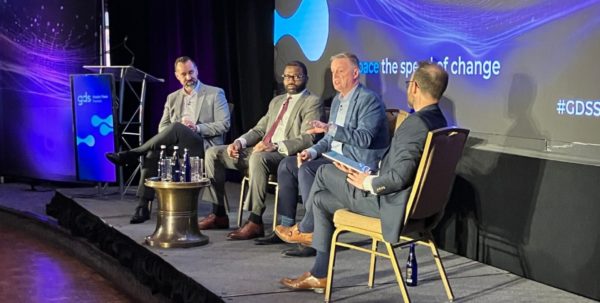
At our recent Supply Chain Insight Summit, experts could all agree that the human element remains a driving force behind successful supply chain operations. Integrating it effectively, however, is where the challenge lies.
Between organizational challenges, cultivating an impactful culture, new technologies, and re-skilling for the future, here’s how leaders are addressing the human element in their supply chains.
Organizational Challenges in the Supply Chain
When it comes to addressing the organizational challenges impacting the supply chain, human interaction is still essential. Identifying them? Sure, we can leverage technology, but when it comes to breaking down silos, balancing competing KPIs, and defining processes? That requires human intervention.
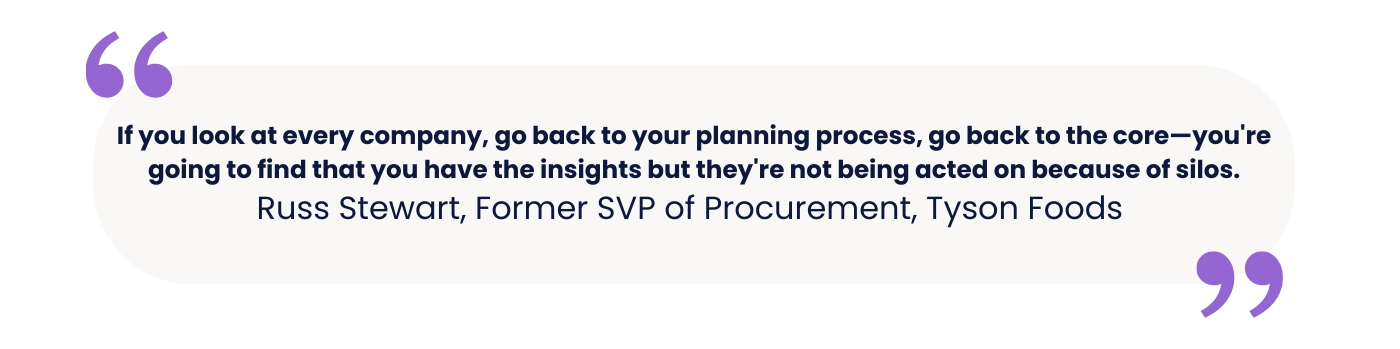
Data silos, for example, prevent insights from being acted on—particularly when knowledgeable individuals aren’t empowered.
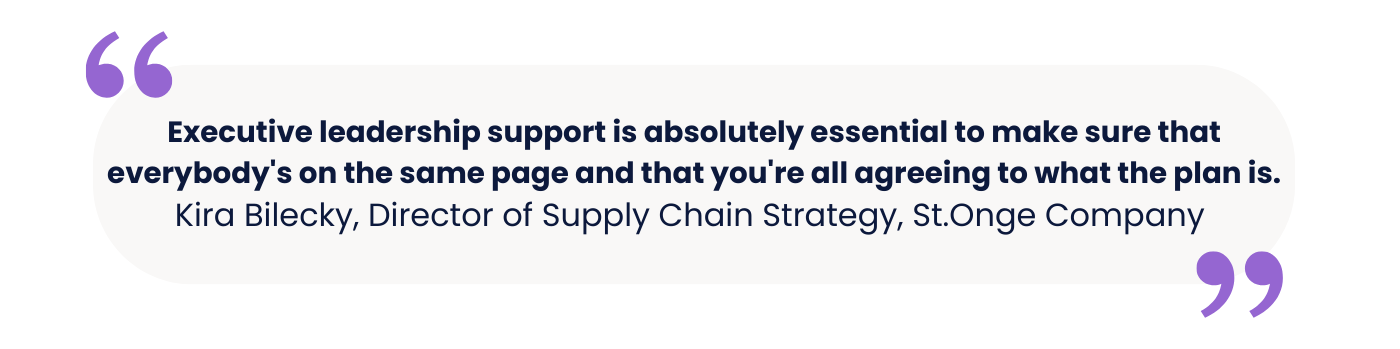
Similarly, conflicting KPIs stifle collaboration and overall performance. Again, the solution is effective leadership to align the teams with shared goals and objectives.
A lack of clearly defined processes and objectives can, and will, hinder your supply chain. This isn’t a technology problem; it’s a people problem. Take the first steps by rallying executive leadership to set clear objectives. Encourage cross-functional collaboration wherever possible and promote the establishment of clear responsibilities and standardized processes. All of this is to say, culture is key.
People-First Culture
Culture plays a central role in driving successful supply chain transformations. To foster a supply chain that thrives amidst change, it’s vital to create an environment where people feel valued, heard, and empowered to innovate.
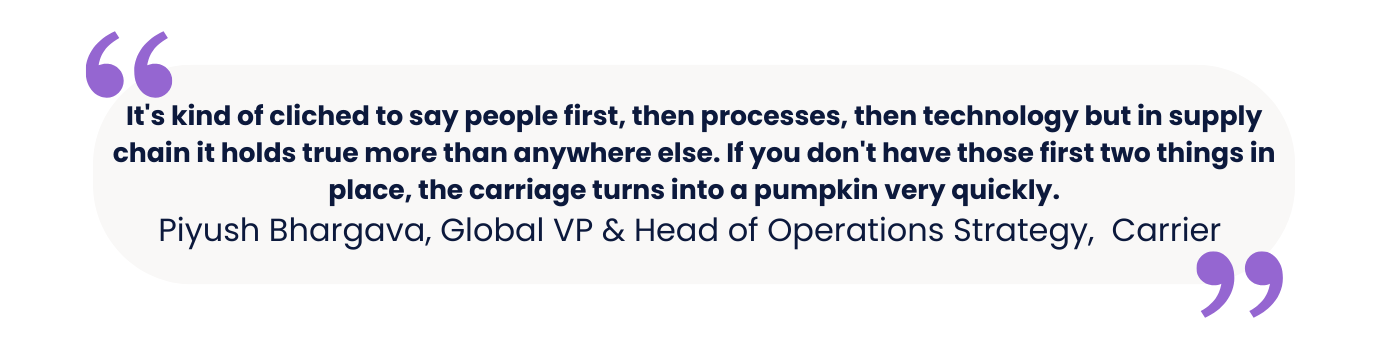
A term used by one of our speakers was intestinal fortitude—the courage to assess challenges honestly and take risks. This mentality is vital for continuous improvement and achieving breakthrough results. Creating a culture of change management ensures that employees are supported as they adapt to new processes, technology, and ways of thinking; essential as our supply chains grow and evolve.
A successful approach involves mindset, skill set, and tool set
Upskilling and Re-skilling for the Supply Chain of Tomorrow
Upskilling and re-skilling are a necessary part of any digital transformation.
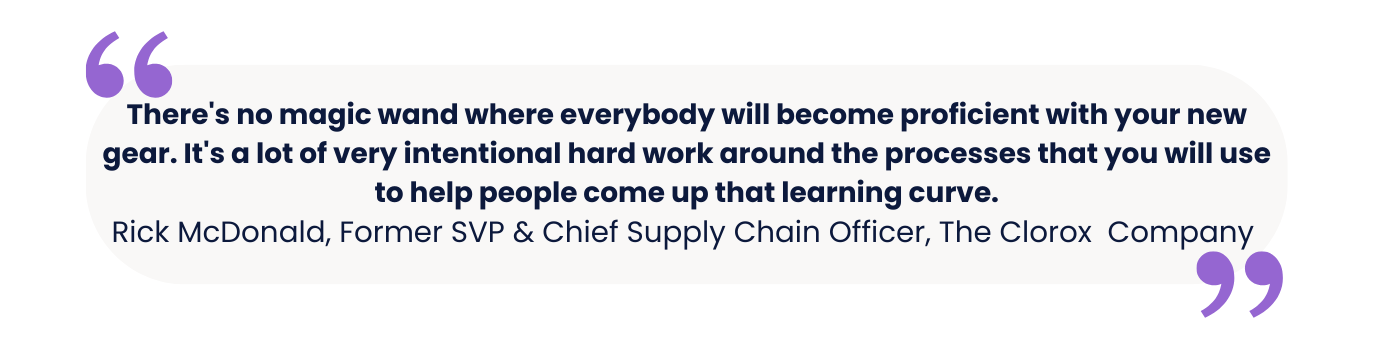
Whether you prioritize bringing in new people or upskilling your existing teams, it’s important to remember that the skills needed for the supply chain of tomorrow are going to look different. Could anyone have predicted the importance of AI 5 years ago? What about data science 15 years ago?
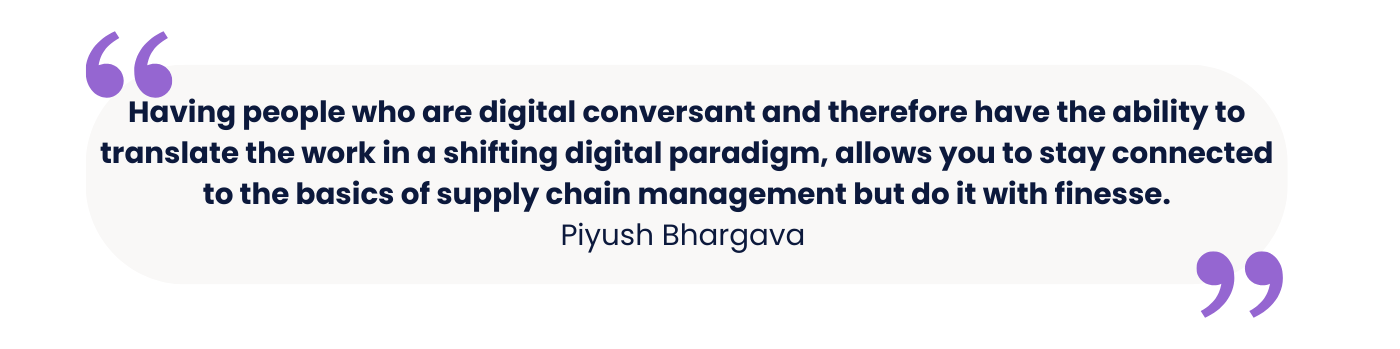
By broadening the recruitment net and offering upskilling opportunities for your team, you can weather the storm of the supply chain skills gap and ensure you are ready for whatever comes next.
Integrating People and Technology
If the human element is to remain an integral part of the supply chain, technology and people must work hand-in-hand. While digital tools can streamline repetitive tasks, it’s the human element that transforms insights into action.
As businesses adopt digital technologies like AI, automation, and predictive analytics, it’s crucial that people are prepared to collaborate effectively with these tools. The strategic integration of people and technology ensures that technology complements human capabilities rather than replacing them.
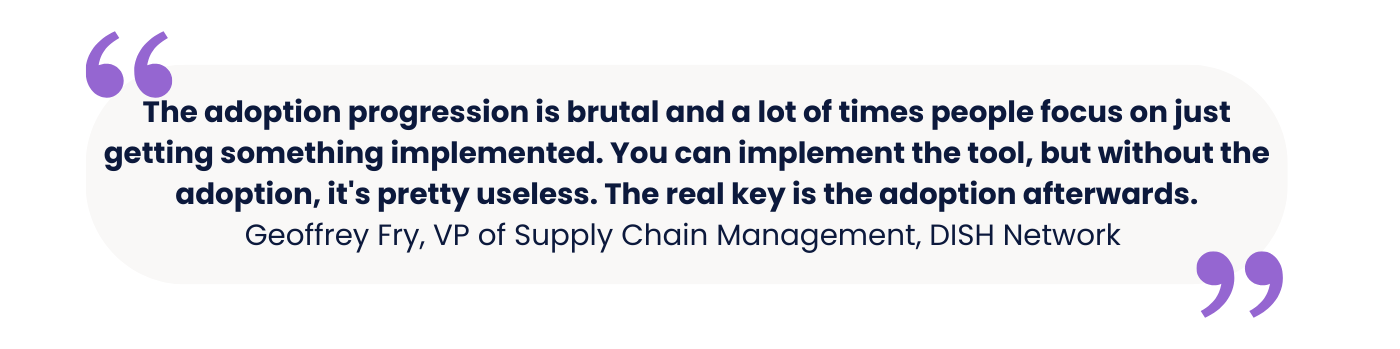
When people and technology are aligned, they create a harmonious and efficient supply chain capable of achieving sustainable success.
The Human in the Supply Chain
At the heart of every successful supply chain is a dedicated, skilled workforce. While technology, data, and innovation are important, it’s people who drive success. By addressing organizational challenges, cultivating a people-first culture, prioritizing upskilling, and integrating technology thoughtfully, organizations can create supply chains that are resilient and future-ready.
As you look to the future of your supply chain, remember that the human element is your most powerful asset. Prioritize people in your initiatives and the rest will follow.
Join your peers and industry leading experts in the conversations shaping the future of supply chains. To pick up where this conversation leaves off, register your interest for our upcoming Supply Chain Insight Summit.
To see all our upcoming events, please see our events page.