
We live in an era where data is hailed as the new oil, the lifeblood of modern organizations. Yet, beneath the surface of sophisticated analytics and cutting-edge AI, a fundamental challenge persists: data quality. Fortunately, over the course of our recent Data & Analytics Insight Summit a clear solution emerged: data governance.
A significant number of the attendees were grappling with the consistency and reliability of their data. Without that reliability, bad data can lead to confused analytics and misjudged business decisions.
Here is what our community had to say on the solutions to the data quality problem.
A Pervasive Problem
The sheer scale of the data quality challenge is undeniable. This isn’t just a minor inconvenience; it directly impacts an organization’s ability to make informed decisions. Imagine trying to build a skyscraper on a shaky foundation. In a city of wobbling towers, it’s the ones built on solid ground that will survive.
Alisha Outridge, the Chief Technology & Product Officer at Byte & Chord, likened the challenge to having “really cool foam soap dispenser stuck in a bar of soap,” rendering it “completely useless”. Compounding this, as organizations increasingly embrace AI and machine learning, the quality of training data and the outputs generated become paramount.
As we barrel towards a data quality tipping point, our community made it clear that addressing this problem must be top of the to-do list for data leaders. But, between a lack of engagement from the business on data processes, a clear skills gap, and the growing complexity of the average data estate, this hydra has a lot of heads.
The Data Governance Solution
So, how do organizations overcome their data quality woes? The answer, resounding across the summit, lies in establishing robust data governance frameworks. Data governance is categorically not a bureaucratic exercise; it’s the bedrock upon which data-driven success is built.
A few key areas of data governance emerged as critical considerations for businesses looking to master their data.
Ownership and Accountability
A fundamental aspect of data governance is defining clear ownership and accountability for data assets. Businesses need to shift away from the traditional view of data as solely an IT responsibility. In his roundtable session, Ashley Laing, VP at Pimcore, stressed the importance of involving the business in data governance early on:
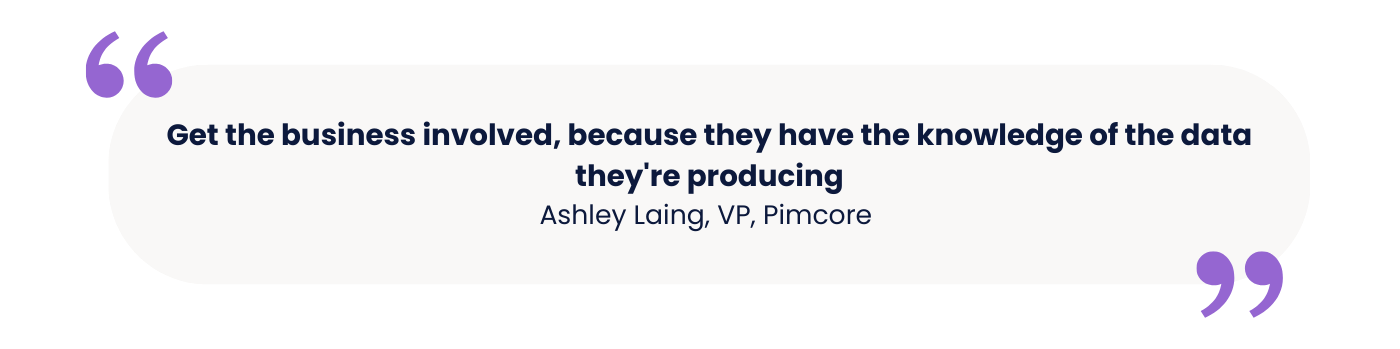
Creating accountability at the stakeholder level is essential to driving engagement with data initiatives and allowing data leaders to leverage the expertise of their teams.
Process Integration
Nobody wants unnecessary bureaucracy. Laing again spoke of the success found by embedding quality controls early in the data lifecycle. This allowed them to “collect the data, validate it, and get the quality controls in place for it,” thereby reducing constant quality checks by implementing them at the source.
This plays a large part in bringing the business on the data journey. You want to make it possible for everyone to be able to contribute in a natural way without it seeming like a burden.
Metadata Management
As highlighted by Latha Subramanian, the SVP of Data Engineering & Analytics at GM Financial, “having a business glossary and having data owners is the key to success for any data program.” Clear and comprehensive metadata provides context and understanding, enabling users to interpret and trust the data.
As part of this, establishing policies and standards for data is a must. Data will naturally fall to chaos without clear guidelines, definitions, and formats. How data is collected? Where and how is it stored? Who is it owned by? How is it used? These are all questions you need to be able to answer.
Data Literacy
Effective data governance hinges around your organization’s ability to understand and work with data. In her keynote session, Dr. Christina Sandema-Sombe emphasized the importance of data literacy as a central part of data governance:
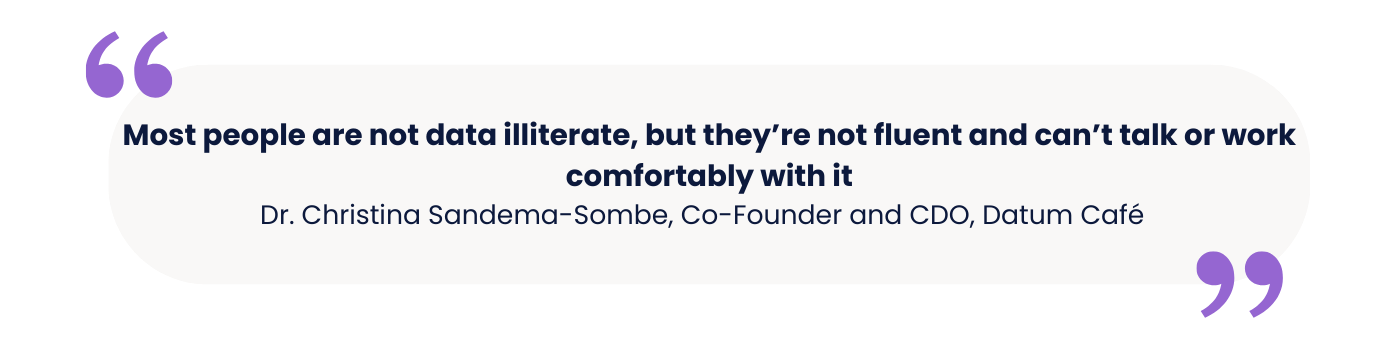
It is vital you educate your organization on the importance of data quality as well as how to effectively work with it. Boost data literacy with training programs that focus on the technical aspects of data and how to interpret and apply it in decision-making.
Quality & Data Governance
Data governance is vital for any organization looking to leverage the full potential of their data. It requires commitment from leadership and collaboration across business and IT. Make it clear that building a culture of data quality is an ongoing journey, not a one-time fix.
Data leaders must take the time to educate the business and empower individuals to take responsibility for their own data. Impress upon your stakeholders the value of data. Doing so will move you from a position of chaos, to one that is primed and ready to drive the business forward.
Join us at our upcoming Data & Analytics Insight Summit this April to discover practical strategies and real-world solutions for overcoming data challenges. Don’t miss out on the opportunity to connect with experts shaping the future of data governance.
To see all our upcoming summits, please visit our events page