
Thanks to rapid technological advancement and the enthusiastic adoption of AI, organizations are quickly realizing they need to sort out their data governance—and fast. But how are data leaders supposed to implement governance frameworks that juggle compliance and ethics while still enabling innovation? Welcome to the world of “agile data governance.”
In the run-up to our next Data & Analytics Insight Summit in Houston this September, we asked our community how they are tackling this challenge. Here’s what they had to say…
Data in the AI Era
The journey towards harnessing AI’s full potential is long and fraught with challenges. Many organizations are still grappling with the “hype cycle” of AI, often finding themselves at the “peak of expectations” but uncertain where projects will ultimately land. We hear our community struggling with the same challenges time after time:
- Data quality
- Siloed data
- A lack of data literacy
Compounding these challenges is the demand for “fresh and timely data” to fuel AI and machine learning projects.
As emphasized by Diego de Aragão, SVP of Analytics at Citi: “Trusted data means trusted AI.”
Diego and his peers were quick to highlight accuracy, security, and a holistic approach to data trust as key to advancing data in the AI era. But, as always, these things are far easier said than done.
The Pillars of an Agile Data Governance Framework
To truly advance responsible innovation, organizations must rethink how governance is implemented. Our community identified several key pillars that define an agile data governance framework:
A Data-First Culture and Radical Transparency
As the saying goes, culture eats strategy for breakfast—something we understand very well. A fundamental shift towards a data-first culture is paramount to agile governance frameworks.
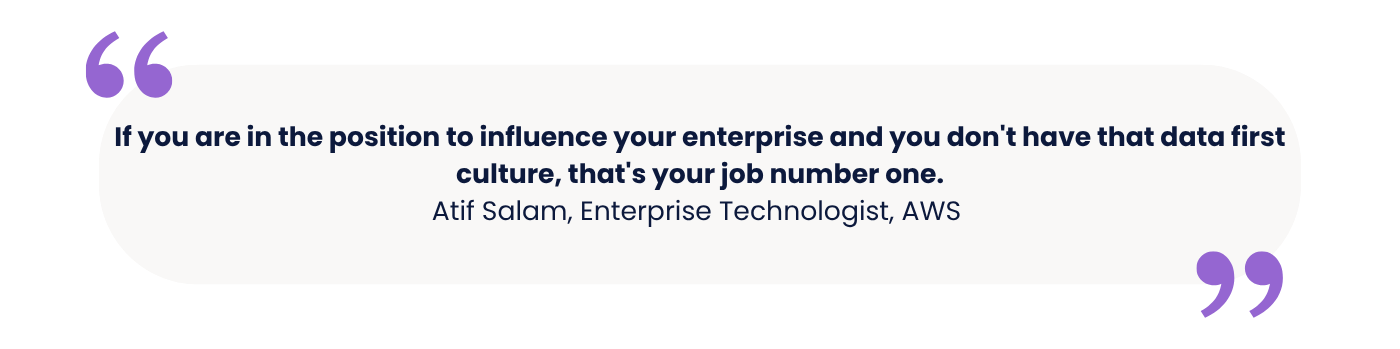
Hody Crouch, VP of Data and Analytics at Aarons, fought hard for what he calls “radical transparency in data.” According to Crouch, the goal should be to grant users access to “the entire data set with some important restrictions.” This approach is driven by the belief that innovation thrives when data is distributed.
Strategic Frameworks for Maturity and Innovation
Scaling agile governance requires more than cultural change, it needs structure. Thankfully, there are plenty of strategic frameworks for data leaders to lean on.
Mikhail Lisovich, CDO at Redwood Logistics, recommended using tools like the data maturity curve to assess where your organization stands and identify priority areas for growth.
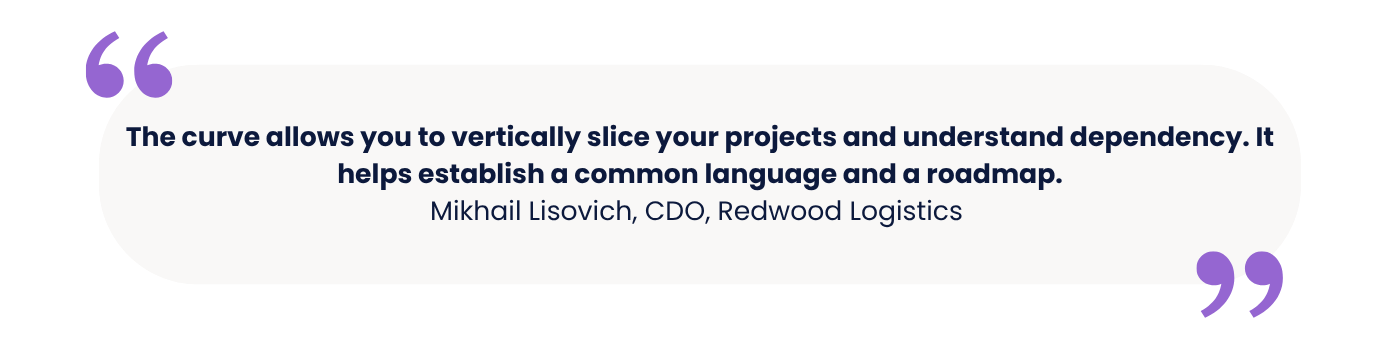
He also highlighted innovation pace layers—a method for categorizing systems by their speed of change, from the slowest-moving systems, your organizational “bedrock” data, to the fastest-moving “systems of innovation.”
Frameworks like these help organizations manage both speed and stability, enabling innovation without sacrificing control.
Responsible AI and Human-AI Collaboration
As AI becomes embedded into more decisions, data governance must evolve. AI governance is guided by ethics, accountability, and transparency.
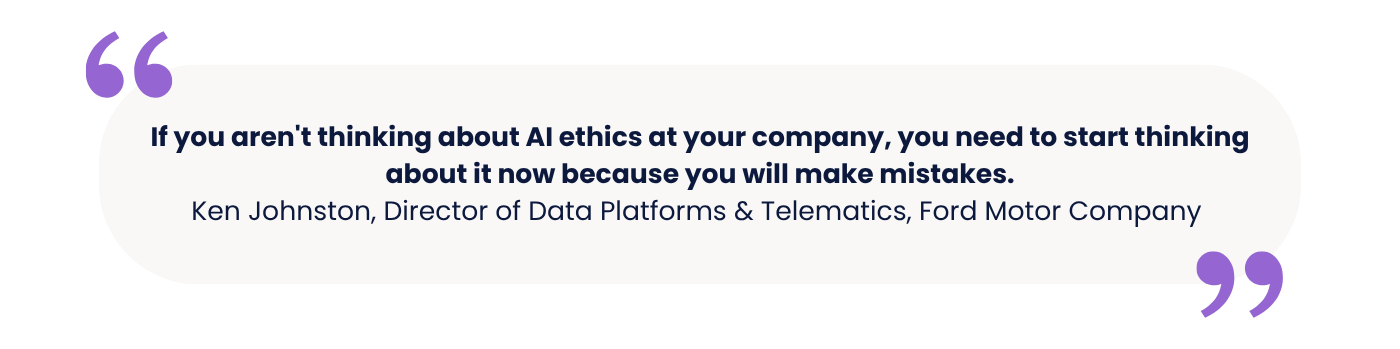
Again, established principles, like Microsoft’s six responsible AI pillars and Gartner’s Trust, Risk, and Security Management framework, can serve as invaluable guardrails. Just never forget the importance of human oversight.
AI should augment—not replace—human judgment. Your teams must understand what information they can share with AI and where human verification is critical.
Responsible Innovation Through Agility
An agile approach to data governance means continuously learning and evolving. It’s about being proactive and decisive while also maintaining integrity.
Shifting Governance Left
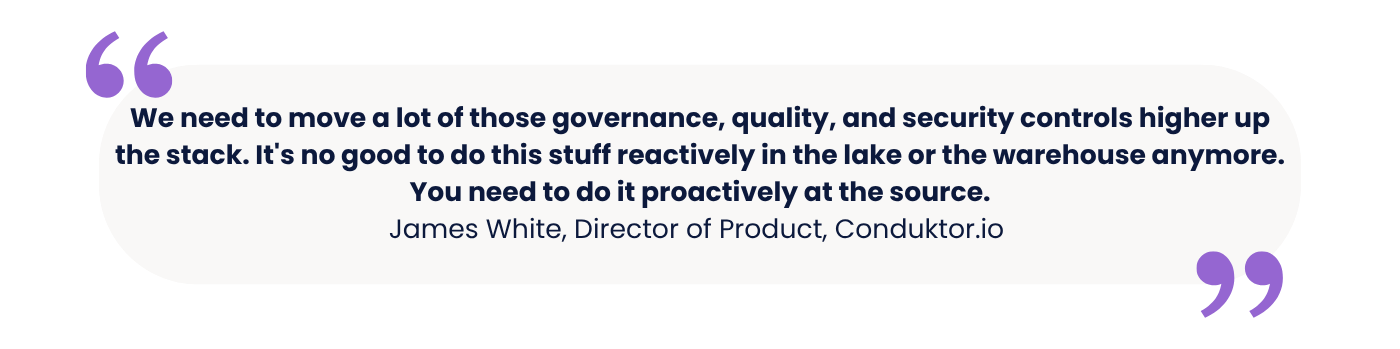
A key concept for agile governance is “shifting left,” which involves moving critical processes early in the workflow so that you can capture problems faster, improve efficiency, reduce errors. This means enforcing data contracts and clearly assigning roles and responsibilities to the subject matter experts best equipped to anticipate and resolve data quality issues preemptively.
Measuring What Matters
Measuring the ROI of data governance can be challenging, but it’s crucial to justify investments to leadership. Dora Boussias, data and AI SME and the closing keynote at our last Data & Analytics Summit, summed it up perfectly:

Reposition data science as akin to R&D. Embrace experimentation and iteration, rather than measuring it against typical software engineering metrics.
Build for the Future, Today
As organizations race to unlock the potential of AI, responsible innovation must be anchored in agile, forward-thinking data governance. That means fostering a culture where data is trustworthy and treated as a strategic asset. It means embedding governance into workflows early, embracing frameworks that support both stability and speed, and always keeping ethics and accountability at the forefront.
The journey is not linear. It requires collaboration, continuous learning, and a willingness to rethink traditional models. But as our community makes clear, the rewards are well worth the effort.
Join us at our upcoming Data & Analytics Insight Summit this September where we’ll be exploring this topic further and other real-world solutions for overcoming data challenges. Don’t miss out on the opportunity to connect with experts shaping the future of data.
To see all our upcoming summits, please visit our events page .