Skilled workers are already hard to come by these days. Following a devilish mix of the fallout from Covid, The Great Resignation, and tougher laws on working immigration, the manufacturing industry, like many others in the US, is struggling to find the right people for the job.
According to a survey by Deloitte and The Manufacturing Institute (MI), the manufacturing skills gap in the U.S. could result in 2.1 million unfilled jobs by 2030. In 2022 alone, 50 million workers left their jobs (that Great Resignation again!).
With all of this in mind, you may wonder what the future of factory workers looks like, and what you can do to minimize the impact of a dwindling workforce.
Why is Manufacturing Suffering so Much?
There are myriad reasons as to why workforce numbers have been consistently dropping over the last few years. With the influx of AI-powered tools, the desire to retrain, and workers having to learn new skills at pace, it’s no wonder things are getting tougher. For manufacturing, though, that’s not where the issue begins.

In the same survey from Deloitte and MI, younger people were said to find manufacturing:
– Doesn’t offer a work/life balance
– Doesn’t have any upskilling/promotion prospects
– Isn’t seen to be very diverse in terms of team
This isn’t what you’re going to want to hear, but, thankfully, there are multiple ways tech can help bridge that employment gap.
Future Focus – Manufacturing in 2025 and Beyond
As technology advances, as do the tools which make manufacturing a much easier job than it was 20 years ago.
AI, the big driver of manufacturing innovation, can improve several aspects of your work, including:
•Predictive Maintenance- AI algorithms analyze data to predict machine failure and schedule maintenance proactively, which reduces downtime and repair costs.
•Quality Assurance- AI-empowered systems automate inspections and identify defects in real-time using computer vision and machine learning.
•Supply Chain Optimization- AI can forecast demand, optimize inventory levels, and predict potential supply chain disruptions.
•Industrial Automation- AI, robotics, and the Internet of Things (IoT) enable machines to communicate and make autonomous decisions to optimize production processes.
•Workforce Augmentation- AI and robotics can automate repetitive tasks, allowing human workers to focus on problem-solving, innovation, and collaboration.
But, while technology is the driver of innovation, people are the beating heart. Even with a smarter factory, you’ll still need feet on the floor to keep things running.
Keeping the Machine Well-Oiled
It’s hard to know how to prepare for a future that’s so uncertain. One thing you can do, though, is currently look at how your company runs.
If you’re lacking skilled workers, ask yourself ‘why?’. With the misconceptions over the industry, it’s on your company to allay any fears from prospective staff.
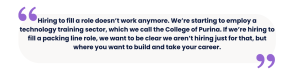

It could be a case of using AI/tech to carry out jobs you used to hire for. Well, why not upskill existing staff and help them realize their potential in other roles.
As good as technology and AI can be, you still need to have that human touch when it comes to important decisions. Rather than replace humans with AI, team them up instead!
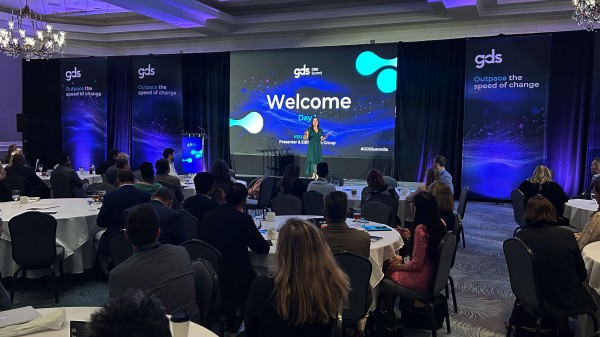
Manufacturing, like everything else, is changing. The future is bright, yet uncertain. Whatever your worries, our upcoming Manufacturing-focused summit will answer some of the biggest questions surrounding the industry. Register your interest now.