Since their implementation earlier this year, President Trump’s new tariff policies have caused chaos for manufacturing leaders all over the world. In the last few months, Manufacturers have had to contend with the decision to pivot production to the U.S., re-map their supplier networks, hunt for cost-saving efficiencies, and identify where they might be vulnerable to price shocks. This comes even as tariffs continue to be negotiated!
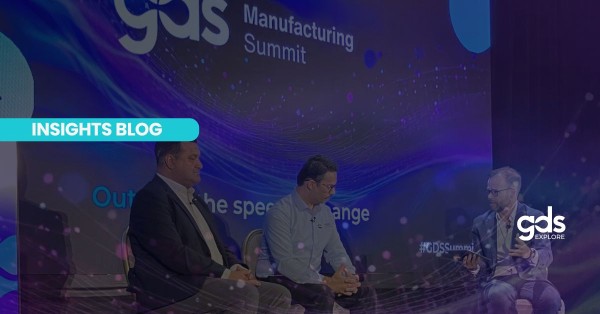
At our recent GDS Manufacturing Summit in Dallas, a key takeaway emerged: change is not just coming to American manufacturing, it’s already here.
Trade Tensions Trigger Strategic Shifts
In a poll taken during the summit, 68% of senior manufacturing executives said they were either actively changing or have already adjusted their production strategies in response to tariffs and trade tensions. Of the remaining 32%, only 5% said they weren’t changing anything while 27% claimed they weren’t at risk of being impacted at all.
68% of a relatively small sample size might not raise too many eyebrows, but when you consider that our Manufacturing Summit brought together senior executives from global leaders like Tesla, PepsiCo, Mondelez, Procter & Gamble, and Honeywell, it offers a rare glimpse into how the industry’s biggest players are navigating a volatile economic climate.
This reaction is unfolding against the backdrop of a U.S. manufacturing sector that, while not unscathed, appears resilient. April’s Bureau of Labor Statistics (BLS) report showed a modest uptick in manufacturing unemployment. With just 1,000 jobs lost, the sector is absorbing the impact better than expected.
But when it comes to future growth, the outlook was mixed:
- 36% of executives forecast modest growth over the next six months
- 8% predict significant expansion
- 15% expect things to remain steady
- 41% see contraction on the horizon
Voices from the Summit: Optimism with a Dose of Realism
Meredith Walker, a global economist and the summit’s keynote speaker, summed up the cautious optimism in the room:
“Our President is saying ‘it is going to be a golden age of American manufacturing,’ and I look forward to the new factories of the future being built across this country. Manufacturing is essential for a nation’s economic prosperity, because it is one of the main drivers of creativity and innovation.”
Keesa Schreane, summit host and our business and technology SME, echoed that sentiment:
“There seems to be a confidence within manufacturing in the ability to weather economic headwinds and there’s a belief about the potential for growth across the sector. Our attendees however seem hesitant to put plans and investments in place to deliver growth due to changing economic policy. Once that future looks more certain, then the real potential of U.S. manufacturing could be realized.”
Walker also shared a more global perspective, noting: “I do believe President Trump will force President Xi Jinping’s hand and China will return to the negotiating table. There are factories in the south of China that are closing right now, and President Xi faces a tremendous amount of domestic pressure.”
And sure enough, since the summit the playing field has changed. A U.S./China tariff pause has been negotiated amidst a number of other high profile global business deals being struck.
What’s Next for U.S. Manufacturing?
If this summit proved anything, it’s that manufacturing in the U.S. is at a crossroads—balancing resilience and uncertainty, with strategic change already in motion. While leaders are cautious, there’s no shortage of long-term belief in the sector’s potential.
One thing is clear: whatever the next chapter holds for global trade, American manufacturers aren’t waiting to adapt.
To continue exploring how your peers are navigating these challenges, and shaping what’s next, join us at one of our upcoming Manufacturing Summits.
To see all our upcoming summits, visit our events page.