
Lean manufacturing is not a new concept, and yet, it has held sway over manufacturing leaders since it was first conceptualized back in the 1950s! Manufacturing has come a very long way since then. While eliminating waste and enhancing productivity are always the goal, is it time to update our ideas of lean manufacturing?
At our recent Manufacturing Summit, our community heard how experienced manufacturing leaders are approaching lean methodologies in modern industry. Here’s what they had to say.
4.0 into 5.0
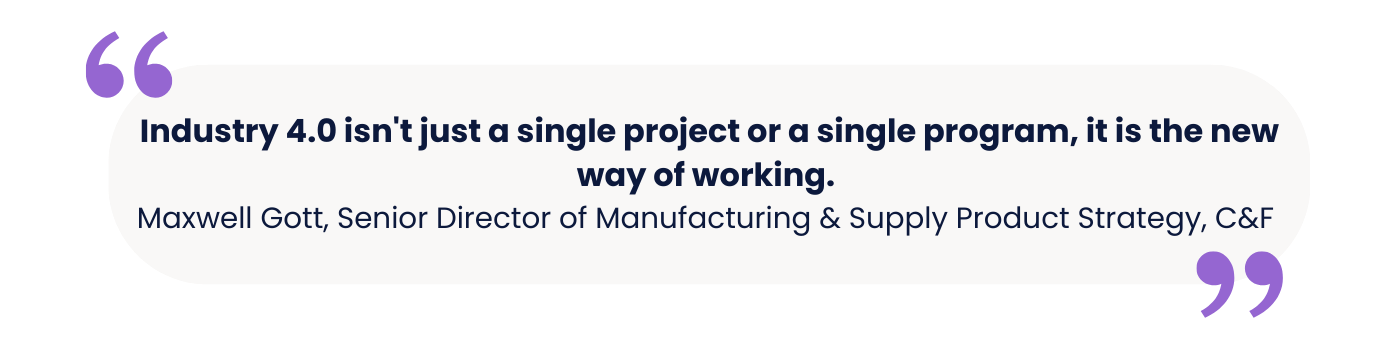
Industry 4.0 represents the so-called fourth industrial revolution. Taking full advantage of IoT, data analytics, robotics, and automation, 4.0 embraces lean manufacturing principles to drive productivity like never before.
If 4.0 is the champion of automation, advanced analytics, and operational visibility, I dare you to have a guess at what industry 5.0 is. If you assumed it was robots running the factory while we all sip margaritas, you’ll be sadly disappointed.
Industry 5.0 is marked by connectivity and collaboration between humans and machines. 5.0 places a greater emphasis on resilience, sustainability, the human element and exploring how technology can augment it.
Whether you are working towards 4.0. or are already looking ahead to 5.0, it’s clear that lean methodologies are still very much a part of manufacturing’s DNA. For leaders today, the challenge is establishing how lean manufacturing can be made smarter for the future.
Lean and Green
Our attendees had a lot to say about the lean manufacturing principles they’ve adopted to drive efficiency:
Data-driven Visibility
Improve your processes with data-driven visibility, and higher quality data sources. This data can be used to refine processes through continuous improvement.
Advanced Analytics
Leverage technology and advanced analytics algorithms to analyze data, discover inefficiencies, and eliminate waste.
Sustainable Development
Meet your sustainability KPIs by optimizing the way you utilize all your resources. Lean methodologies for sustainability allow organizations to save costs while driving sustainability initiatives.
Lean manufacturing provides the framework for organizations looking to streamline processes, maximize productivity, and foster a culture of efficiency.

Making it Work
Promoting modern lean principles can be challenging for organizations set in their ways. As with all challenges today, the solution starts with people.

Cultivate a culture of learning and encourage experimentation within your teams. Empowered employees are more likely to contribute to improvement initiatives.
Make sure any new technologies are aligned with the business. Our community were keen to highlight the very real threat of “Pilot purgatory”—where new and innovative ideas go to die because they haven’t been fully developed. Don’t digitize for the sake of digital. Before making any changes, ensure you fully understand the process. Do a journey map. Walk the shop floor. Understand what your teams are working with before you start making waves.
Strategies for Consolidation
In a world with a glut of 3rd party partners and tools, understanding where you can trim the fat and eliminate waste is a key part of modern lean principles.
Educate your operators and engage your external partners. Tell them where you want to go and evaluate the technologies that can be embedded in their processes. Prioritize partners with experience and a robust support model. One of our speakers saw success by ranking their suppliers by spend to consolidate costs.

Before you jump to the inevitable conclusion of “what if we just built everything in house?” Don’t. It will start out fine, but you’ll be kicking yourself in 10 years when you have to bring the person who built it out of retirement to fix it for you.
A Lean Future
Lean manufacturing’s future lies in its ability to adapt and integrate with emerging trends. Asking whether lean principles are still relevant is akin to questioning the relevance of continuous improvement itself. By embracing technology, prioritizing sustainability, and fostering a culture of continuous improvement, organizations can ensure that lean manufacturing remains a valuable tool in the modern industrial landscape.
For more insights on the future of manufacturing and to join the conversations shaping it, check out our upcoming Manufacturing Summit this May.
To see all our upcoming summits, please visit our events page