Cybersecurity is complex. Or is it?
It’s not an exaggeration to say the threat from cyber-attacks has never been greater. Ever-expanding risk surfaces colliding with increasingly sophisticated attacks is what keeps cybersecurity leaders up at night. But while cyber experts bend over backwards trying to secure everything, is there a way to simplify cybersecurity?
At last month’s Security Insight Summit in Dallas, our audience heard from Kevin J. Scott, CIO & Chief Technology Officer at PGA of America, who suggested embracing simplicity could be the solution.
Defense-in-Depth VS…
Defense-in-depth is the current gold standard for cybersecurity. Characterized by layers of security measures, defense-in-depth operates under the assumption that one layer alone can’t stop every threat. If attackers get past one layer, the only prize they win is the next one.
Sounds logical, right? But with each added countermeasure, your security estate grows in cost and complexity. Managing multiple tools requires continuous oversight, careful configuration, and a laundry list of skills and proficiencies.
Despite the challenge, defense-in-depth remains a staple for many, particularly in sectors where regulatory compliance and data protection are paramount.
Kevin Scott, however, has another suggestion: simplify cybersecurity.
…Radical Simplicity
Galvanized by a malware attack on his active directory, Scott launched a radical simplification strategy to remove legacy complexity and migrate to the cloud.
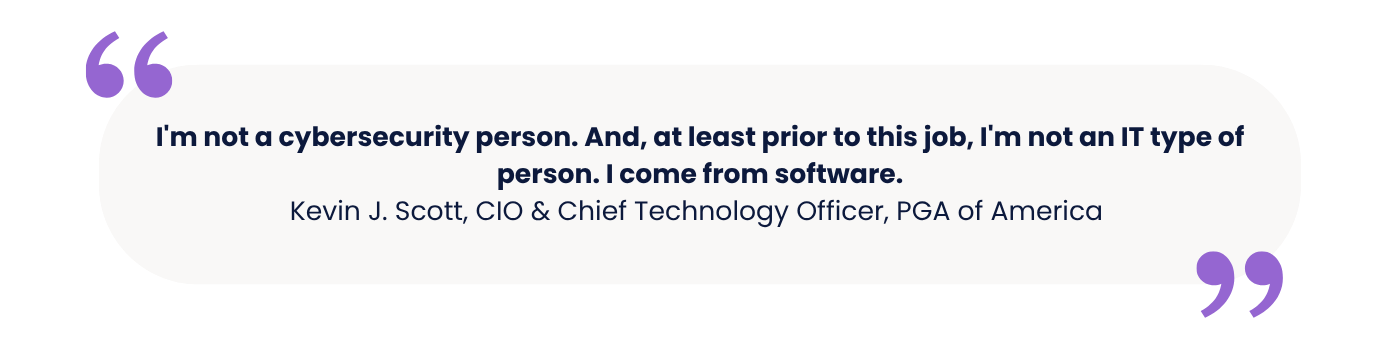
Scott’s unique perspective gave him license to question the assumptions around existing security strategies. Seeing how cloud migration had mitigated the fallout of that early malware attack, Scott doubled down.
He stripped away nearly all on-prem infrastructure in favor of pure cloud and automation. He moved all services to AWS or SaaS, a fully automated network at half the previous cost. No Active Directory. No VPN. And no on-prem data centers. With everything in the custody of cloud services, there became nothing to protect or break into.
In short, Scott’s plan was to kill complexity and refocus the IT team on innovation, not babysitting servers.
Is Simple Really Better?
Security leaders comfortable behind their walls of security countermeasures may roll their eyes at radical simplicity, but there are definite benefits to paring things back.
Fewer Vulnerabilities
Keep it simple, stupid. Scott makes a persuasive argument that simpler systems are easier to secure. By cutting back you also shrink your attack surface. There’s also the human cost of complexity. Fewer tools mean less alert fatigue, fewer errors, and a lighter load on your SOC.
Cost and Efficiency
Scott’s strategy saw compute and ops costs drop: “When we first did the migration to AWS, our costs were cut in half. That felt pretty good. And then they were cut in half again.” Cloud billing is largely usage driven, so predictable workloads mean predictable spend. Your IT teams also get time back, freeing them up to spend more time developing.
Predictability, Visibility, and Simplicity
Simplified systems are generally easier to understand and manage and less prone to human error. With fewer components, IT teams can identify and address issues more quickly.

What’s the Catch?
Radical simplicity has drawbacks too.
Vendor lock-in and concentration risk creates a single point of failure. Not only that, but with fewer layers, an organization must make sure the remaining defence is airtight. Simplicity demands discipline. If you want to follow in Scott’s footsteps, knowing where your responsibility for security ends and your cloud vendor’s begins is an absolute must.
It’s also not possible for every organization. Regulatory and legacy constraints pose a challenge for a lot of industries. In these cases, ripping out old tools isn’t trivial. Many compliance frameworks were written assuming physical boundaries and legacy directories.
But Scott never claimed radical simplicity would be simple. His team spent years planning the cloud migration and change management that would lead to his simplified solution.
Can We Simplify Cybersecurity?
Simplicity in cybersecurity offers real and measurable benefits. Lower costs, streamlined operations, and in many cases, a smaller attack surface. Scott’s radically simplified, cloud-native approach highlights just how far an organization can go in eliminating legacy complexity without compromising resilience. But, as compelling as simplicity is, it’s not a one-size-fits-all solution.
Scott was never out to convert everyone to radical simplification. His keynote underscored something bigger: that we may have underestimated the value of simplification done right. In a threat landscape that’s only getting more sophisticated, sometimes less truly is more.
For more from experts like Kevin J. Scott and to continue exploring how your peers are navigating these challenges, join us at our upcoming Security Summit.
To see all our upcoming summits, visit our events page.