In financial services, trust is everything. As AI matures from passive tools into autonomous agents – able to act, decide, and adapt – that trust is being tested like never before.
For banks investing in AI at scale, the next challenge isn’t just about accuracy or speed – it’s about credibility. Agentic AI is redefining how work gets done, how customers engage, and how decisions are made. But in a high-stakes, highly regulated environment like banking, trust must be built into every layer.
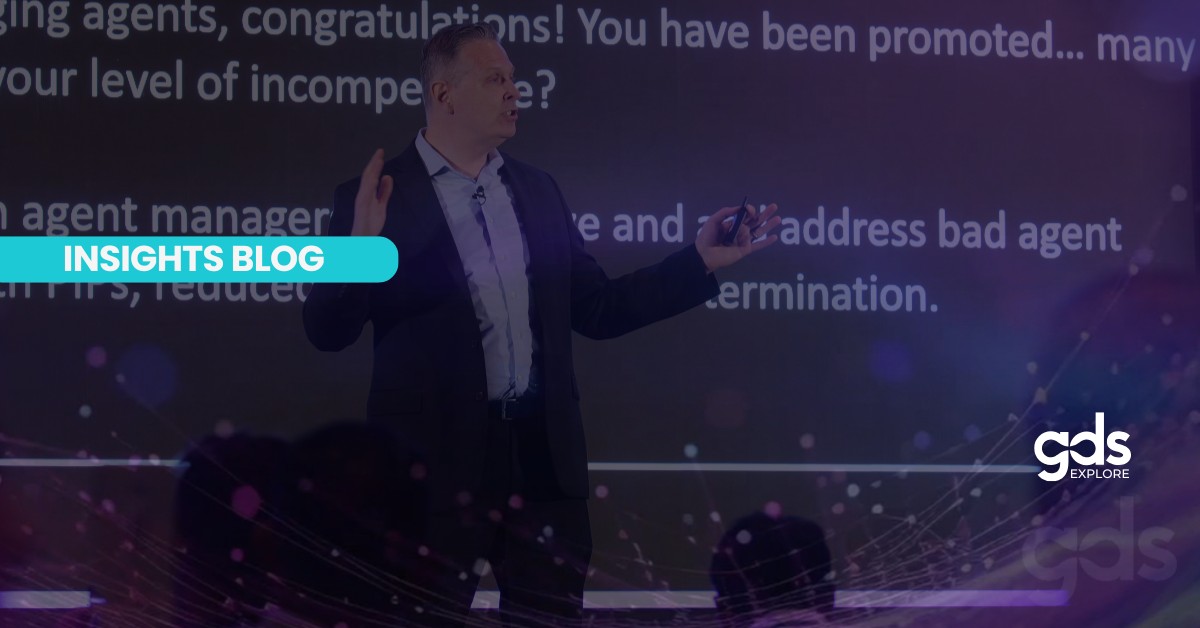
In a standout keynote at a recent GDS Banking Insight Summit, James Massa, Senior Executive Director of Software Engineering & Architecture at JPMorgan Chase, offered a candid and forward-thinking take on what this means in practice. His framework – The Agent, The Bank, and The Customer – lays out the ABCs of building trust in agentic AI.
Why Trust Is the New Infrastructure
“At JPMorgan Chase, we’ve got 60,000 technologists and an AI budget in the billions – with a B,” Massa stated. “And yet, even with all that firepower, trust remains the single most important factor”.
AI isn’t just a technical shift – it’s a cultural one. And as Massa reminded us, the banking industry must approach agentic AI not as a tool to control, but as a colleague to trust. That trust, however, doesn’t come automatically.
Agents Are the New Workforce – But Who Manages Them?
Agentic AI doesn’t just answer prompts – it makes decisions. It reads customer emails, infers intent, references internal documents, and executes transactions. In other words, it behaves like a member of staff.
According to Massa, an AI agent can be “as powerful as a team of employees.” That brings new expectations: performance reviews, bias checks, and even the digital equivalent of HR processes.
Banking leaders must ask:
- What data was the agent trained on?
- How do we evaluate its performance over time?
- Can we “offboard” an underperforming agent safely?
It’s a shift from managing software to managing digital talent – and the implications span governance, compliance, and ethics.
Agentic AI in Banking – The Role of RAG in Building Trust
Retrieval-Augmented Generation (RAG) is emerging as a core component of trusted AI systems in banking. Rather than generating responses from general internet training data, RAG enables agents to base answers on verified, internal content – policy documents, regulatory frameworks, and recent communications.
As Massa put it: “RAG is my favourite way – the most trusted way – because now you’re working with approved material”.
In banking use cases, this might look like:
- Reading a customer inquiry
- Retrieving guidance from internal onboarding protocols
- Executing the appropriate next step
- Citing the source of the decision
It’s a complete loop – transparent, auditable, and aligned with compliance requirements.
Hallucination Risk – And the Myth of Perfect Accuracy
AI hallucination remains one of the biggest risks to trust. Massa identified two categories:
- Factual hallucinations – incorrect data or references
- Faithfulness hallucinations – failures to follow the intended task or logic
“There is no 100% test coverage. No perfect model. They will hallucinate,” he warned.
Key mitigation strategies include:
- RAG grounding – training models on trusted content
- LLM-as-judge systems – where one AI evaluates another’s output
- Human-in-the-loop vs. Human-as-QC – distinguishing between active involvement and oversight
For banks, this is about more than accuracy – it’s about governance. AI systems must not only work well – they must fail safely, explain decisions, and adapt without compromising integrity.
From Chatbots to Agent Orchestration – The Future of Workflows
The next evolution isn’t smarter chatbots – it’s orchestrated, multi-agent ecosystems. Massa outlined a model where:
- A user initiates a task
- An orchestrator determines intent
- Specialised agents retrieve information and perform actions
- Outputs are validated and logged
This system architecture mirrors modern banking operations – distributed, compliant, and customer-centric. It also unlocks true intelligent automation for use cases like KYC, client onboarding, and real-time compliance checks.
But orchestration adds complexity. “What happens when one agent hallucinates and talks to another agent who also hallucinates?” Massa asked. “It’s a game of agentic telephone”.
What Banking Leaders Should Do Next
As competition shifts from best-in-class models to best-in-class systems, financial institutions must act now to establish trust frameworks for AI.
Four strategic priorities:
- Treat agents like people – vet their data, track their decisions, and monitor their “performance.”
- Build RAG into your stack – ground AI in trusted internal documents to eliminate hallucination risks.
- Design for orchestration – ensure your agents work together under strong governance and control.
- Invest in explainability – create systems where AI can justify decisions and pass audit trails.
Final Thought – Trust, By Design
Agentic AI won’t replace your people. But it will change the shape of your organisation. Trust must be designed into the core – from the datasets you use to the outcomes you allow.
At GDS, we help global banking leaders build the conversations – and capabilities – that make transformation real. Because in the era of agentic AI, transformation without trust is just automation.
And in banking, trust is the business.