In an era defined by technological evolution, it’s not enough for CIOs to rest on their laurels. With AI leading the charge, technology has graduated from something that enables processes, to being the processes. CIOs can no longer be content as custodians of technology; it’s time to step up and become business leaders.
We’ll be exploring this conversation as it develops at our upcoming CIO Summits, but the leaders at our most recent CIO Insight Summits were already tackling this challenge head-on. Here’s how they are evolving for the future.
From IT Leader to Business Leader
At our CIO Insight Summit in the Netherlands earlier this year, Alan Guthrie, Global CIO and VP of Transformation at Calderys, noted that CEOs and boards now expect CIOs “to be a leader to drive the business in the right outcome, be it EBITDA or be it sales”.
Echoed across the pond at CIO Boston the following week, Cheri Esposito, CIO at Hytrol Conveyor Co., stressed the CIO’s role as “a business transformation leader.”
Speaking alongside Alan Guthrie, Alexander Press, the VP Head of Technology Modernization at Sanofi, framed the modern CIO as “technology ambassadors in the triangle of technology, process, and organization”.
Communication – Speaking the Language
We all know communication is important for leaders, but what does it mean to communicate effectively when your message might fly above the head of your audience?
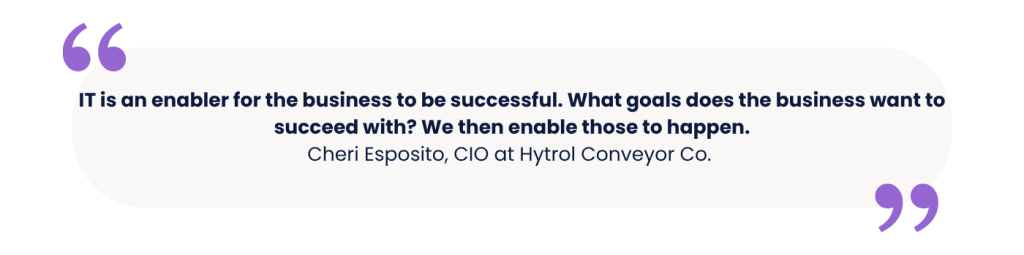
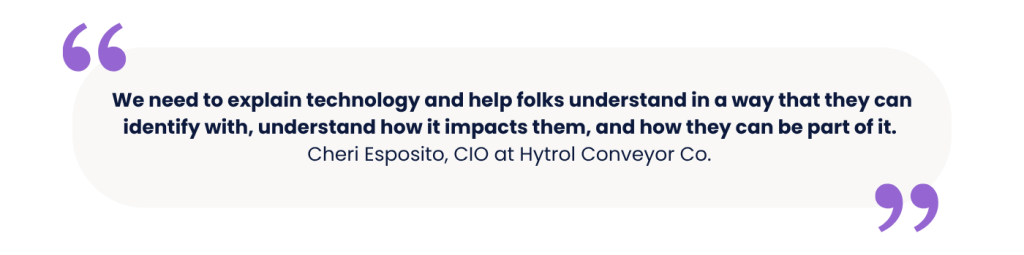
Advanced technology can be hard for a lot of people to wrap their heads around. When people don’t understand something, they push back. If CIOs want to avoid the pitchforks and torches, they need to master the ability to communicate complex ideas in a way that people can intuitively understand. As Esposito remarked:
Effective communication is characterized by Alexander Press as “extremely high frequency engagement” with “regular touch points” across all organizational levels. Securing IT’s seat at the table involves proactively engaging business leaders to understand their challenges and goals—not just at yearly catchups, but constantly.
Simple acts like walking the floor and interacting with employees will go a long way to helping CIOs understand the challenges of the business and how they can best communicate a solution.
Culture – Reshaping Your Organization
Not every organization is ready for the CIO to be sat at the table. This is rarely out of malice, more likely it’s a result of an outdated business culture.
A big part of positioning IT at the heart of your organization is visibility. Communication plays a big part in raising your profile, but don’t stop there. Eliminate what Press calls the “IT vs business mentality” by creating multi-functional teams that bring together representatives from operations, process, and technology to make agile decisions collaboratively.
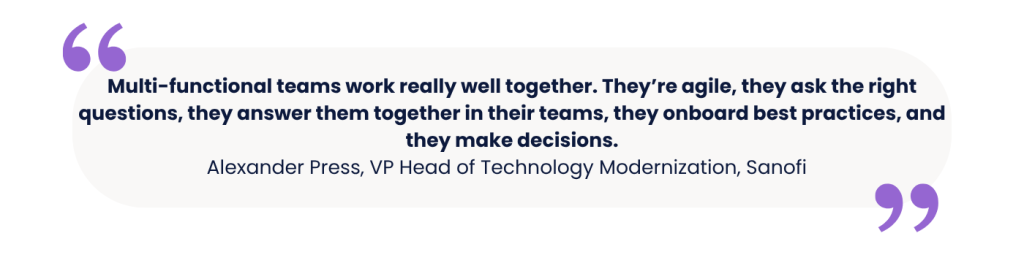
By showing your IT champions behind the curtain and involving them in the process, the lines between IT and business blur until you just have the business.
Self-Awareness – It’s Not Just About the Business
To evolve as a CIO requires more than just business transformation, but personal transformation as well.
For CIOs to lead under this new paradigm, they must invest in themselves as much as possible. This involves understanding your strengths, promoting resilience, and prioritizing self-care. In her keynote on empowering IT leadership, Georgina Pawley, CEO & Founder of Impactful Coaching, had this to say:
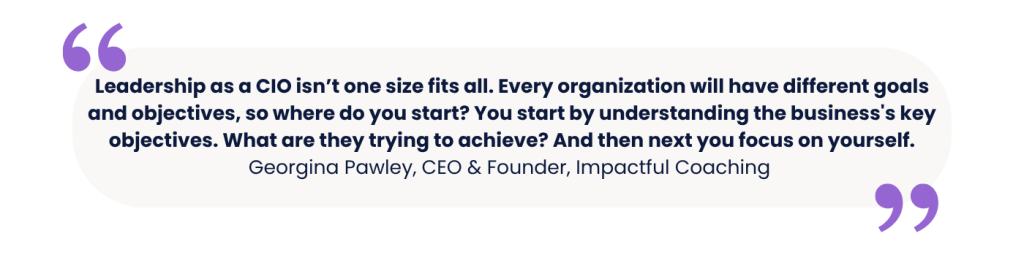
By not prioritizing your own development and health as a business leader, you are actively disadvantaging yourself. In an ever more challenging environment, this isn’t a mistake CIOs can afford to make.
Success as an Evolving CIO
As technology becomes indistinguishable from business strategy, the most successful CIOs will be those who embrace their role as transformation leaders, communicators, and culture shapers.
To thrive and evolve as a modern CIO, you need to not only understand the tech but know how to translate it, humanize it, and apply it with purpose.
The journey is ongoing, but one thing is clear: the CIOs who lean into this evolution won’t just support the business. They’ll shape its future.
To continue exploring how your peers are navigating these challenges, and shaping what’s next, join us at our upcoming CIO Insight Summit.
To see all our upcoming summits, visit our events page.