Empowering growth through innovation and strategic vision
Navigate the wave of change as AI revolutionizes business and society, making the balance of innovation & operational excellence more crucial than ever.
Yet, technology alone won't suffice – strategic vision is vital, and you must bring people on the journey with you.
Modernize the digital core, transform your data to unlock business potential, and develop resilience in IT leadership & culture with our expert guidance.
Immerse yourself in thought-provoking insights
Exclusively curated from our previous
CIO Physical Summit
Speakers

Felipe Peñacoba Martinez


Andy Wilkins

Grace Hayes


Irin Rahman


Romi Arman

Hebe Middlemiss


Jack Sharpe


David Harding


Matt Leighton

Darren Woollard


Jesus Checa


Brian O'Reilly


Stuart Harper


Germán Faraoni Heidenreich


Emma Verhagen


Leonard Jayakumar


Magdalena Jonczak


Patrick Willger


Dr. Christopher Boortz


Daniel Watkins

Agenda
1:10 pm - 1:35 pm
Keynote
Don't Fall into AI FOMO: Navigating the AI Hype to Deliver Real Business Value

As AI revolutionises business and society, organisations are feeling the pressure to adopt these technologies quickly. However, the balance right between innovation speed and strategic execution is critical. In this session, Romi Arman will dive into how CIOs can avoid the trap of AI FOMO—resisting the urge to jump on the AI bandwagon too early without a clear understanding of the true business or customer problem it aims to solve OR jumping on it too late and allowing the AI train to leave the station. Tying into the wider theme of empowering growth through innovation and strategic vision, Romi will share his experience of how he has extracted real value from AI by identifying practical use cases in the energy sector, setting clear value drivers (The 5C's), aligning leadership and business vision, and navigating the organisational change necessary to implement AI effectively.
1:40 pm - 2:20 pm
Panel
The impact of AI on value creation: Navigating culture, leadership, and change management



According to Gartner, $3 trillion dollars will be spent on AI in the next 3 years. Join our panellists to explore the transformative role of AI in driving value creation across various industries, from enabling smarter decision-making, enhancing customer and employee experiences, and optimising operations. How can organisations maximise the benefits of AI while effectively understanding and managing the cultural, leadership, and change-related aspects of its implementation?
We’ll also untangle the strategic challenges and cultural barriers involved. Statistics reveal that over 50% of AI implementations fail to progress beyond pilot projects. Common pitfalls include poor data quality, a scarcity of crucial skills and partnerships, misalignment of AI initiatives with business priorities, inadequate governance, and a lack of organisational buy-in.
Discussion areas include:
- What's the value creation from AI in your respective industries? What barriers have you faced?
- How do you make AI part of your culture?
- What role does leadership & change management need to play?
- Does AI help or hinder employee creativity?
- Tackling talent in the age of AI.
- Economics of AI – value creation vs. cost cutting
- Where has AI already proven value, and where has the promise of AI not yet delivered?
2:20 pm - 2:45 pm
Keynote
The real value of remote technology – How to navigate today’s challenges in a globalized business world

Today’s global megatrends have created a business landscape where complexity is inescapable, change is continual, and efficiency is at risk.
Powering hybrid and remote work, staying secure at scale, bridging the skills gap, accelerating digital transformation, and becoming more sustainable are among the key challenges facing businesses to have crystallized in recent years.
In this keynote, discover how powerful remote technology is helping businesses overcome these obstacles and excel in their operations – while keeping their customers’ best interest at heart.
3:00 pm - 4:00 pm
Roundtables
Track 1: AI and the human touch: Striking the perfect balance

Artificial intelligence can significantly enhance productivity by automating tasks, analysing data, generating content, facilitating informed decision-making, and aiding in text and code creation. Given its evident benefits for businesses, it is unsurprising that worldwide spending on AI was estimated at $154 billion USD in 2023 (Statista, Feb 2024).
However, the adoption of AI also presents challenges and risks. Employees may feel apprehensive about potential job displacement, while the need for reskilling can seem daunting. Leaders must also consider ethical, privacy & data concerns, model bias, lack of creativity, regulatory considerations, and technical difficulties. How can organisations embrace such tools whilst navigating potential risks?
The development of AI must prioritise the well-being, trust, and interests of its users. How can business leaders leverage AI's advantages while balancing the needs of employees and customers? What does a mutually beneficial relationship with AI entail as these technologies continue to evolve?
Track 2: Modernising the digital core: A holistic approach

Modernising the digital core is essential for business transformation, and IT must be an enabler of this process, delivering an environment that is proactive, agile, and uninterrupted. The future belongs to companies embracing AI and digital / data-driven strategies, but there are many still struggling with legacy systems, processes, and culture that are hindering innovation and progress. Hitachi Vantara found that 74% of organisations have started a legacy system modernisation project but failed to complete it.
Why is this? Many organisations still approach modernisation in a siloed way when today’s technology landscape is highly interdependent. There are a multitude of technology platforms and vendors, alongside a shortage of talent & skills to navigate this complexity. IT leaders must take a holistic approach to modernisation, ensuring that disparate infrastructure, applications, and data work seamlessly to benefit the business.
Transformation must start with well-defined business strategies, goals, and success metrics. For the CIO, maintaining a close partnership and alignment with all business functions (and vision) is vital, as well as fostering a culture where teams feel empowered, accountable, and recognised.
Track 3: Transforming data to unlock business potential

Data and analytics play an integral role in every business decision related to digital transformation, impacting customer & employee experience, operational efficiency, product innovation, and collaboration. Technology leaders understand that in today's digital era, data has emerged as the most crucial strategic asset for organisations. This is especially true given the recent advancements and vast potential in AI.
Unsurprisingly, 47% of CIOs are modernizing their data platforms for enhanced scalability and growth (PwC, February 2024). To fully capitalise on the potential of information available, organisations must fundamentally change their approach to leveraging data. Expanding the pool of people who can analyse data and develop meaningful insights is crucial for gaining a competitive edge. However, data democratisation faces challenges such as silos, data quality concerns, and a shortage of skills and talent.
Transforming the view of D&A from what was typically considered a support function, to a strategic growth asset and core business competency requires IT leaders to innovate to match the pace of digital transformation. How do we quantify and prove the ROI of data initiatives in the context of business value? And what strategies should be prioritised to drive change while bridging the gap between business and technology?
4:10 pm - 4:40 pm
Masterclass
Leadership in Times of Accelerated Change

In today’s fast-paced world, change is the only constant. This session will explore the multifaceted challenges and opportunities that arise from rapid change, focusing on uncertainties, geopolitical challenges, and the necessity of overcoming ambiguity. We’ll delve into the importance of teamwork, address the growing concern of burnout in tech roles, and discuss how senior leadership must adapt to lead effectively in this dynamic environment.
Come and join Grace Hayes, EVP Global Market Technology at Mastercard for an open dialogue Masterclass exploring "Leadership in Times of Accelerated Change". Together we will explore challenges faced by leaders today, how to managing change both within and outside our control, and the different types of leader that is required, as we navigate uncertainty and ambiguity to positive outcomes.
4:45 pm - 5:15 pm
Workshop
Elevating endpoint resilience: Threat Mitigation Strategies & AI Insights

In this session you will learn:
- Current threat landscape for endpoints
- Effective strategies for mitigating known and unknown threats
- A glimpse into AI’s role in predicting and preventing threats
7:20 pm - 9:30 pm
Gala Dinner
8:30 pm - 8:55 pm
Dinner Keynote

8:00 am - 8:40 am
Panel
The ultimate balancing act: IT innovation & operational excellence



For IT leaders, balancing innovation with operational excellence and stability is crucial. Both are essential for the CIO's goal of ‘keeping the lights on’ while implementing cutting-edge technologies and accelerating transformation.
A 2023 Gartner report found that improving customer experience and operational excellence outrank ‘growth’ as digital initiatives. This places pressure on IT leaders, who must not only develop next-generation IT environments, but also manage a host of other responsibilities, including cybersecurity, cost & technical debt, digital platform development, employee experience, and resource limitations.
Furthermore, Forrester predicts that only 10% of tech executives will succeed in driving long-term growth, mainly due to an overemphasis on service delivery and quality. To perfect this balance, tech leaders must prioritise a business-aligned tech strategy and commit to a human-centric approach to technology for effective collaboration.
Ultimately, without ensuring stability and resilience in operations, innovation alone can lead to problems. By maintaining a laser focus on both, a healthy balance can be met where operational excellence supports (rather than hinders) the drive to innovate.
Join this panel to explore the challenges, solutions, and strategies for achieving this optimal balance via effective prioritization, with insights from three industry leaders.
8:40 am - 9:10 am
Keynote
The Data Centre Paradox - there is no centre

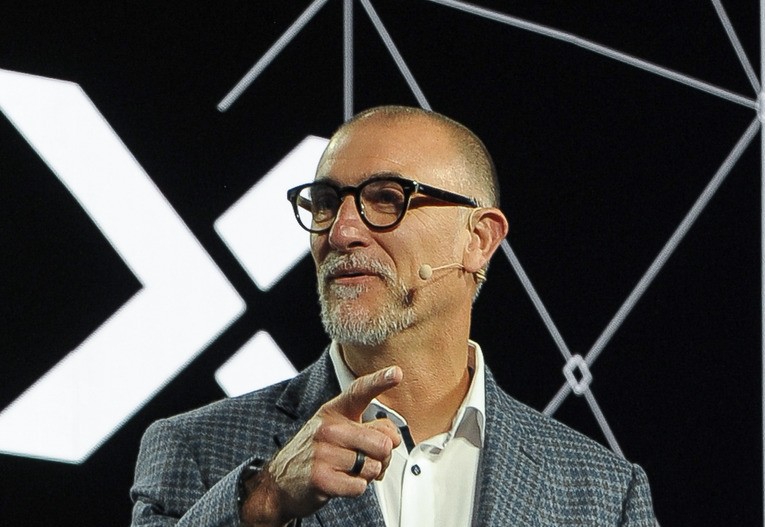
Applications and data exhibit all the traits of Roald Dahl’s fictional character, Veruca Salt - they demand a lot from I.T. and immediately let us know when they need attention. In this session Darren Woollard will talk of the complexity of today’s data centre, market forecasts and how a mindset shift is needed when leaders are planning their future technology strategy for applications and data.
9:20 am - 10:20 am
Roundtables
Track 1: AI and the human touch: Striking the perfect balance
Artificial intelligence can significantly enhance productivity by automating tasks, analysing data, generating content, facilitating informed decision-making, and aiding in text and code creation. Given its evident benefits for businesses, it is unsurprising that worldwide spending on AI was estimated at $154 billion USD in 2023 (Statista, Feb 2024).
However, the adoption of AI also presents challenges and risks. Employees may feel apprehensive about potential job displacement, while the need for reskilling can seem daunting. Leaders must also consider ethical, privacy & data concerns, model bias, lack of creativity, regulatory considerations, and technical difficulties. How can organisations embrace such tools whilst navigating potential risks?
The development of AI must prioritise the well-being, trust, and interests of its users. How can business leaders leverage AI's advantages while balancing the needs of employees and customers? What does a mutually beneficial relationship with AI entail as these technologies continue to evolve?
Track 2: Modernising the digital core: A holistic approach
Modernising the digital core is essential for business transformation, and IT must be an enabler of this process, delivering an environment that is proactive, agile, and uninterrupted. The future belongs to companies embracing AI and digital / data-driven strategies, but there are many still struggling with legacy systems, processes, and culture that are hindering innovation and progress. Hitachi Vantara found that 74% of organisations have started a legacy system modernisation project but failed to complete it.
Why is this? Many organisations still approach modernisation in a siloed way when today’s technology landscape is highly interdependent. There are a multitude of technology platforms and vendors, alongside a shortage of talent & skills to navigate this complexity. IT leaders must take a holistic approach to modernisation, ensuring that disparate infrastructure, applications, and data work seamlessly to benefit the business.
Transformation must start with well-defined business strategies, goals, and success metrics. For the CIO, maintaining a close partnership and alignment with all business functions (and vision) is vital, as well as fostering a culture where teams feel empowered, accountable, and recognised.
Track 3: Transforming data to unlock business potential
Data and analytics play an integral role in every business decision related to digital transformation, impacting customer & employee experience, operational efficiency, product innovation, and collaboration. Technology leaders understand that in today's digital era, data has emerged as the most crucial strategic asset for organisations. This is especially true given the recent advancements and vast potential in AI.
Unsurprisingly, 47% of CIOs are modernizing their data platforms for enhanced scalability and growth (PwC, February 2024). To fully capitalise on the potential of information available, organisations must fundamentally change their approach to leveraging data. Expanding the pool of people who can analyse data and develop meaningful insights is crucial for gaining a competitive edge. However, data democratisation faces challenges such as silos, data quality concerns, and a shortage of skills and talent.
Transforming the view of D&A from what was typically considered a support function, to a strategic growth asset and core business competency requires IT leaders to innovate to match the pace of digital transformation. How do we quantify and prove the ROI of data initiatives in the context of business value? And what strategies should be prioritised to drive change while bridging the gap between business and technology?
10:30 am - 11:00 am
Future Focus Speakers
Plate-spinning for success: Resilience in IT leadership



Today’s CIOs face daunting and often conflicting demands. As the business leader in charge of adding value to the business, establishing trust, finding the right talent, and inspiring technology innovation, there is a vast amount of pressure. Navigating these challenges simultaneously is much like learning to spin plates in opposite directions. In our rapidly evolving technological landscape, success of digital transformation relies not just on implementing new technologies, but on forging robust partnerships across the organisational hierarchy.
Research by Gartner (2024) suggests that “CIOs are being tasked with an increased demand in delivering business value from technology initiatives without additional resources.” In light of the pressure to do more with less - how can the IT leader effectively balance people, process, and technology? What does it take to become strategic partners who align technology with business goals?
Within this session we will explore the ever-increasing demands, realities, and opportunities that CIOs and Technology Leaders face today and how they can effectively manage them to achieve sustainable resilience through adaptive leadership, persistent strategies, and applied innovation.
11:05 am - 11:35 am
Masterclass
Master the Art of the Possible with AI

Are you ready to unlock the full potential of AI for your business but unsure where to begin? In this exclusive masterclass, we’ll dive into how to make informed, strategic AI investments that deliver maximum impact. Learn how to identify top AI opportunities tailored to your industry, ensuring you make the right choices for growth and innovation.
Discover the steps to start your AI journey, and explore practical examples of AI delivering transformative ROI. Whether you’re looking to boost productivity, optimize operations, or drive revenue growth, this masterclass is designed for you.
12:45 pm - 1:10 pm
Closing Keynote
Transformation: Is Culture the Key?

Maintaining an organisational culture that is continuously driven to explore creative and innovative solutions is difficult and underpins and an organisation’s competitive advantage. Organisations are naturally predisposed to stagnation, maintenance of status quo, and inclined to repeat successes rather than continuing to innovate. ‘Is Culture the Key?’ raises a simple but challenging question; how do we create an organisational culture that is resilient and comfortable in the constant dynamism and turbulence of the contemporary operating environment?
1:10 pm - 1:30 pm
Beyond the Challenges

Fairmont Carton House - Dublin, Ireland
Situated in Maynooth, 24 km from Phoenix Park, Carton House A Fairmont Managed hotel features accommodation with free bikes, free private parking, a fitness centre and a garden.

Why attend?
Connect with like-minded senior leaders for a curated agenda, focused on tackling your current business critical challenges and driving industry forward.
Be a part of exclusive shared learning, horizon scanning and actionable insights enabling organizations to deliver transformative strategies.
Build meaningful relationships with solution providers matched to your business priorities to help accelerate your projects and deliver your objectives.