Hurricane Helen disrupted our first CX Innovation Summit of 2025. You can’t control some things, but here are three major friction points in a customer journey you can… Or can you?
The Three Biggest CX Problems According to CX Executives
There are some things that you cannot control. But for all those who joined us in person and digitally at our first CX Innovation Summit of 2025, the most passionate conversations were reserved for three things organizations can control but frequently don’t.
Why? We’ll discuss that at the next CX summit. For now, here are the three most significant organizational issues preventing the delivery of exceptional customer journeys. Can you fix them?
1. The Customer Experience and Cost Management Conflict
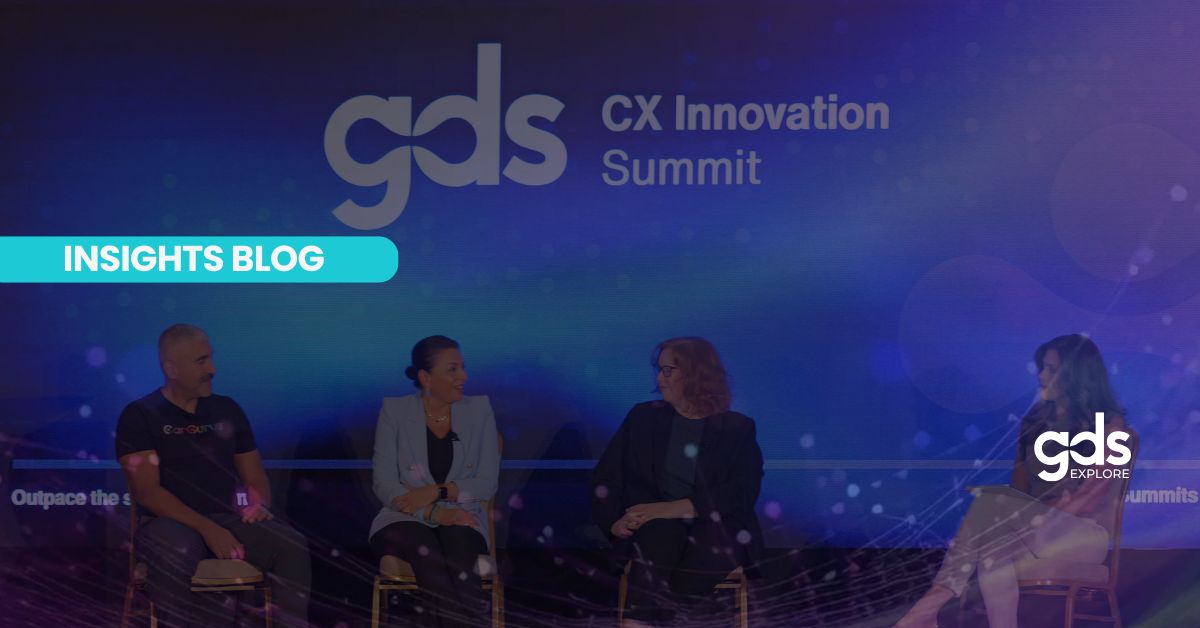
According to our panel—QStory’s CRO, Simon Beck, Whirlpool’s SVP of engineering and innovation Heramb Dandekar, and Joe DeLuca, contact center director for Wyndham Hotels and Resorts—making cost reduction a primary driver behind CX programs can quickly cause things to fall apart.
They believe it’s risky to meet customers where it’s cheapest (like shifting to digital self-service) instead of where they prefer or are accustomed.
DeLuca pointed out that prejudices against bots persist, with approximately 80% of consumers quickly “hitting the zero button.” And a bot that cannot seamlessly hand off a customer to a live agent with context worsens the experience.
2. A to B, Via C, Then X, Back to D, Over to Z…
Complicated user journeys are the most significant source of friction in CX. Executives at the summit recognized it as the leading challenge in a poll, with 70% of the votes.
Why are so many journeys complex? According to our community, the number one reason is a lack of definition. Too many organizations believe CX is the service experience when, in fact, it should encompass the entire buyer journey from wherever and however it starts to purchase and beyond.
This matters. A lack of understanding leads to a lack of ownership, and according to a recent Qualtrics survey, poor customer experiences threaten $3.7 trillion in annual revenue.
3. The Contact Center is a Busted Flush
This was a hot topic for our second panel—Interactions’ director of product management, Nick Ruiz, Synchrony’s VP for journey analytics, Jeff Carson, and Verizon AVP Neil Astmann—who described the current contact center model as “broken.”
Why? First, businesses often see it as an underperforming cost center instead of a key success driver. Second, the live agent experience in the customer journey is also fractured. According to Astmann, metrics such as average handle time and containment optimized by AI do not always address customer frustration stemming from being stuck in digital channels or waiting.
Third, and most importantly, the hurdle to providing exceptional CX is having proficient personnel and processes that support them. Justin O’Brien, VP at NICE summed the problem up, um, nicely:
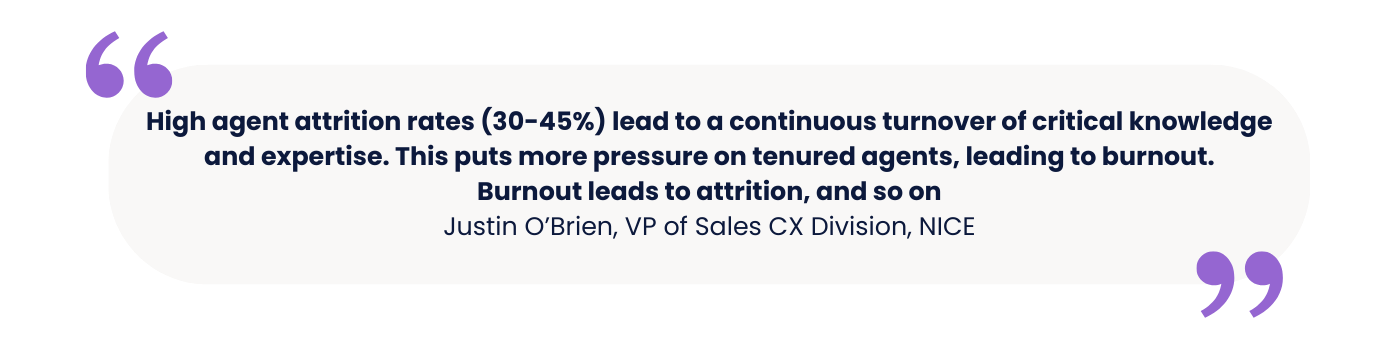
Our community agreed: Focusing on the people supporting the experience, not just the technology, is essential. The agent experience and customer experience are interconnected. And issued a warning: Lack of investment in people can be a weakness, especially if paired with significant investments in AI.
Which brings us full circle. First, resolve conflicts between CX and cost management, and then…
To continue exploring how your peers navigate these challenges and what’s next in customer experience, join us at one of our upcoming CX Innovation Summits.
To see all our upcoming summits, visit our events page.