If you’re a CMO in 2025, you’re not just the voice of the brand. You’re the translator between cultural insight and shareholder value. You’re the bridge between the quarterly earnings call and the street-level conversation. And if the August CMO Insight Summit is any indication, you’re also the organisation’s Chief Resilience Officer.
Across industries the growth game has changed. Not because brand fundamentals have disappeared, but because the way those fundamentals connect to culture, capital, and customers has been rewritten.
Here’s how the most forward-thinking CMOs are adjusting the lens.
1. ROI That Stands Up in the Boardroom
For decades, ROI was the scoreboard. Now it’s the contract. Your CEO and CFO expect the marketing number to make as much sense in an investor deck as it does in a brand tracker.
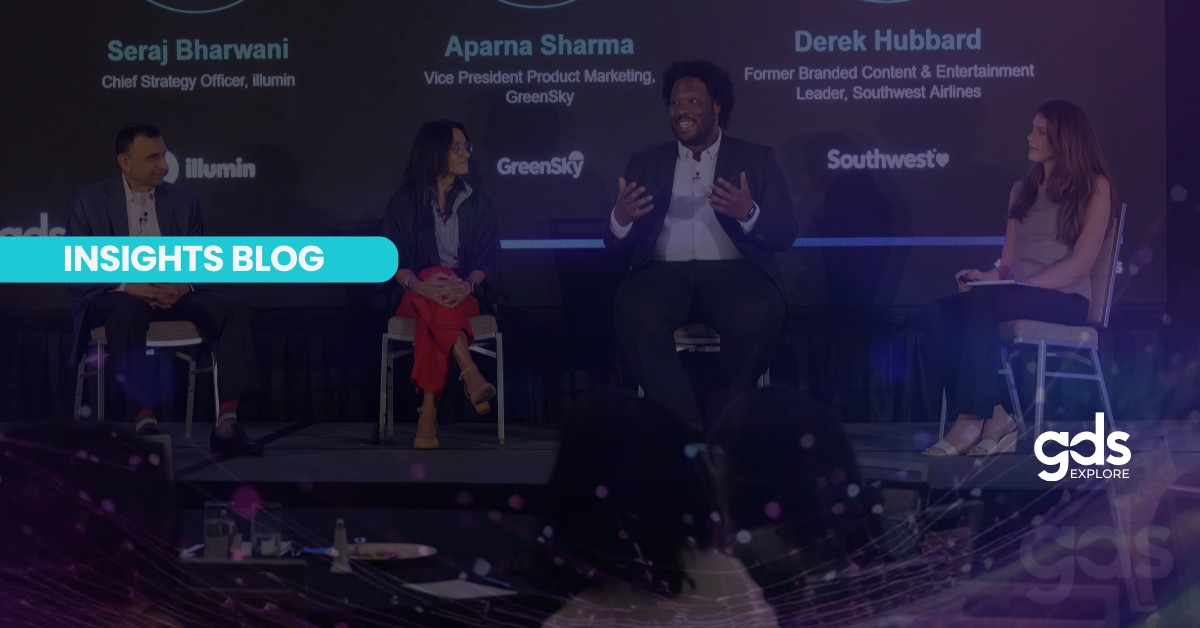
“Everybody knows what ROI is… What everybody is struggling with is [that] they can’t figure out how to negotiate the time horizon,” noted Illumin’s Siraj Bharwani. Derek Hubbard, formerly of Southwest Airlines, framed it: “If the audience is not entertained and connected, there will be no one to sell things to.”
Leaders like Allstate and PepsiCo are part of a new emerging pattern: turning “soft” metrics into “hard” results.
That means translating brand affinity into customer lifetime value, engagement into incremental profit, and hidden social influence into measurable sales lift. ROI isn’t going away; it’s just moving from a marketing slide to the balance sheet.
2. Culture as a Growth Engine, Not a Costume
In a saturated category, your competitor can copy your product features. They can’t copy the way you belong in your customer’s life. . That’s where cultural relevance becomes a game-changer.
At Saucony, CMO Joy Allen-Altimare is repositioning a 126-year-old performance brand for a consumer who values style, culture, and community as much as split times. Through ethnographic research in New York, LA, Tokyo, and London, Saucony identified their target audience: the “move makers”- trend-conscious, authenticity-driven individuals who can spot inauthenticity from miles away. These are the consumers who demand not just a product, but a genuine cultural connection. The brand’s One is One platform now unites performance heritage with cultural relevance.
The takeaway? Pick your lanes in culture and invest in them deeply. This isn’t about surface-level trends; it’s about owning an authentic space that resonates with your audience. Look at Rockefeller Center as an example. The iconic landmark has transformed into a magnetic brand moment. Fashion shows on the rink, SKIMS pop-ups, and immersive experiences have turned it from just a symbol of New York into a dynamic cultural ecosystem. It’s a prime example of how true cultural investment can transform something static into a living, breathing brand experience.
3. Responsible Marketing as a Growth Strategy
Inclusion has become a political flashpoint. But as Lola Bakare reminded the room: “If you have the power to literally change [people’s] sense of belonging… why wouldn’t you?”
Responsible marketing isn’t CSR in disguise. It’s about identifying brand-relevant societal needs and solving them so well they drive outsized business results. AT&T’s She’s Connected content series elevates women athletes and entrepreneurs while promoting its small-business services. Five years, 124 million views, and a stronger brand position later, it’s proof that relevance and responsibility can compound.
4. Narrative Intelligence: The Human Advantage Over AI
Content is no longer scarce. Attention is. And in an AI-flooded world, what separates the memorable from the ignored is not how much you say, but when, and in what context.
“Storytelling is expressive… Narrative intelligence is interpretive—awareness and timing,” said Henry Wong, CMO of Borealis Foods . AI can generate paragraphs. It can’t sense the moment when a founder’s humanitarian backstory will resonate so strongly it convinces Gordon Ramsay to join your company as a shareholder.
The call to action: map your brand’s narrative arc, look for the gaps between what you think you’re saying and what audiences actually hear, and train your teams to read cultural undercurrents before they brief a campaign.
5. Thinking Like a CEO
Venky Shankar’s advice was direct: “Marketers have to convert marketing from a spend arm to an investment arm.” Boards are looking for CMOs who can hold a P&L, shape pricing strategy, and forecast with accuracy that satisfies a CFO.
Gap’s expansion of the CMO role into operations and profitability isn’t an outlier, it’s a signal. The CMO seat is evolving into a growth architect’s desk. Weekly touchpoints with finance, operations, and technology aren’t “collaboration.” They’re table stakes.
6. Resilience as a Leadership Imperative
Todd Blyleven’s keynote was a masterclass in vulnerability and strength. A survivor of the 2017 Las Vegas mass shooting, he spoke candidly about PTSD and the power of humanised leadership: “There’s nothing wrong with helping at all, anytime—as long as it’s humanized, loving, and sincere.”
For CMOs, the takeaway is twofold: reputation is built in peacetime but tested in crisis, and team resilience is a competitive advantage. In a world of constant disruption, safeguarding your people’s capacity to perform is as strategic as safeguarding your brand’s equity.
7. Brand as an Experience Ecosystem
The strongest brands aren’t static assets; they’re systems. Every touchpoint—physical, digital, live, content—feeds the others.
At Rockefeller Center, retail fuels dining, dining fuels culture, culture fuels tourism. At AT&T, sports and entertainment partnerships act as story platforms that continually reinforce the brand’s purpose of connection. Sabra has claimed the “pre-dinner snack” ritual to protect its core hummus business while extending into new categories.
The thread: build a flywheel, not a funnel. Let experiences cross-pollinate, so every activation lifts the whole.
The 2025 CMO Agenda
From the main stage to the side conversations, one theme dominated: the role is expanding, and the expectations are higher. The modern CMO must be:
- A board-literate strategist who can defend brand investment in the language of shareholder value.
- A cultural participant, not just an observer.
- A narrative architect who knows when to speak and when to listen.
- A business operator with P&L and pricing fluency.
- A resilience builder for teams and customers.
- A designer of ecosystems, not just campaigns.
The fundamentals remain: insight, creativity, and execution. But in an era where every quarter brings a new disruptor, the CMO who thrives will be the one who can connect the dots, between culture and commerce, story and strategy, humanity, and hard numbers.
Because in 2025, marketing isn’t just about selling more. It’s about leading better.