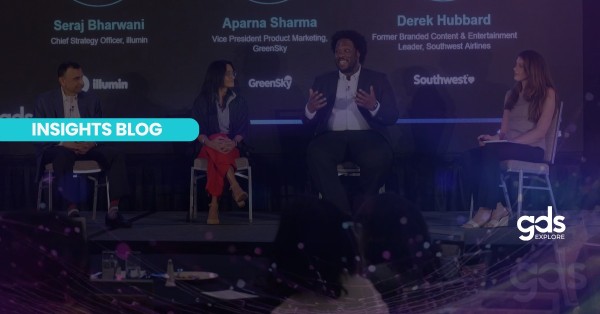
Last week at our CMO Insight Summit in Dublin, we welcomed 70+ senior executives from companies such as Condé Nast, PepsiCo, Unilever, Nestlé, Warner Bros, Nike, Adidas, and McDonalds to discuss the ever-changing digital landscape and the actional insights to navigate these changes, including how to elevate privacy from a mere compliance checkbox to a core brand value.
Through a number of keynotes, workshops, plus roundtables discussions over 2 days we have compiled the key discussion points focused on data and analytics for you to implementing transparent and respectful data practices that enhance efficiency and personalization in your organization.
Data Privacy as a Brand Differentiator
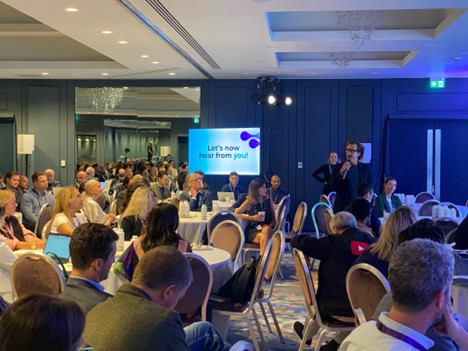
Experts from Twilio guided roundtable conversations on data privacy and the significant challenge in managing consent and data privacy across various customer touchpoints and platforms while ensuring consistency. This challenge persists as the privacy landscape evolves, with varying legislation across different countries adding another layer of complexity to customer communication strategies.
To address these challenges, CMO’s are exploring the following solutions:
- Fostering a Privacy-First Culture: Moving beyond reliance on a few key champions, organizations are working to instill a company-wide culture of data privacy responsibility.
- Building In-House Expertise: Investing in dedicated data privacy teams has become crucial for navigating the complex regulatory landscape.
- Leveraging External Knowledge: CMOs are tapping into external expertise for country-specific legislation and relying on tech vendors to manage compliance across different regions.
This comprehensive approach not only ensures compliance but also enhances brand trust and customer loyalty, driving business growth and competitive advantage.
The Human-AI Symphony
CMOs are orchestrating a complex symphony of human expertise and artificial intelligence, our roundtable discussion let by Ogilvy Consulting explored how to better understand the challenges and opportunities presented by AI. While AI tools have become increasingly accessible, many organizations still face hurdles in adoption. Some employees harbour concerns about AI’s capabilities, potential biases, and ethical implications.
Additionally, securing financial investment for AI initiatives can be challenging when the benefits may seem hypothetical to decision-makers.
The solutions that the roundtable revealed were to implement a culture of innovation that spans departments, encouraging diverse teams to embrace AI solutions. By positioning AI as one instrument within the broader marketing technology stack, rather than a standalone solution, organizations can create a more cohesive strategy.
Furthermore, investing in training programs helps teams understand and leverage AI effectively, fostering a continuous learning environment.
CMOs can uncover deeper customer insights from vast datasets, automate routine tasks to free up human creativity, enhance personalization efforts at scale, and improve forecasting and predictive modelling. The key to success lies in striking the right balance between human expertise and AI capabilities.
Harness the Power of Data
In the keynote discussion “Riding the Wave – Redefining Sailing for the Modern Fan,” Leah Davis, Chief Marketing Officer at SailGP, highlighted how her team leveraged data to successfully launch this global new sporting league. SailGP, is an international sailing competition featuring high-performance F50 foiling catamarans, has teams competing across a season of multiple grands prix worldwide.
Emphasizing the importance of data in SailGP’s rapid growth, Leah stated,
“We took every data capture opportunity to fast track our growth and get to our destination faster”.
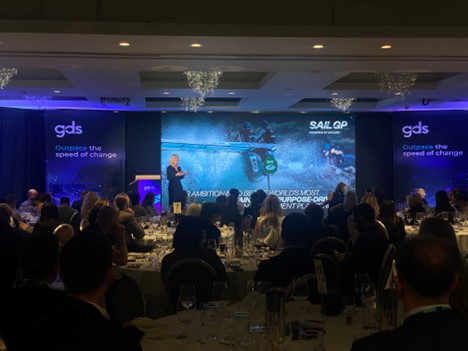
With only five years to prove the concept of this brand-new sport, SailGP has implemented an aggressive data collection and utilization strategy gathering 35k data points per second from each F50 boat, from 125 sensors on the boat, generating 48 billion data points every weekend!
The collected data is shared across all teams, promoting fair competition, and enhancing overall performance. This approach ensures that all teams have access to the same information, fostering a more competitive environment. It is also used to create engaging content for fans, for example their GoPro footage becomes their TikTok content with just one video generating 90+Million views alone.
This data-driven approach allows the league to provide more in-depth insights into the sport, create more engaging and shareable content, and to attract a wider audience through innovative use of social media platforms.
SailGP’s strategy demonstrates how a new sports league can use data not only to improve the competitive aspects of the sport but also to drive fan engagement and growth in the digital age.
Join our upcoming CMO Insight Summit in Florida, to continue the discussion on data-driven tools and technologies promising to revolutionize your marketing strategies, the ethical and legal implications of data collection and usage, and hear a panel discussion on the critical issues of brand safety, data privacy, authenticity, and more with Jeannie Houchins, Former Vice President Brand Communications & Experiences, at Starbucks.