Enterprise AI Strategy Has Entered a More Honest Phase
For the past two years, enterprise AI has been defined by momentum. Investment surged, pilots multiplied, and expectations climbed fast.
Now, the conversation is shifting.
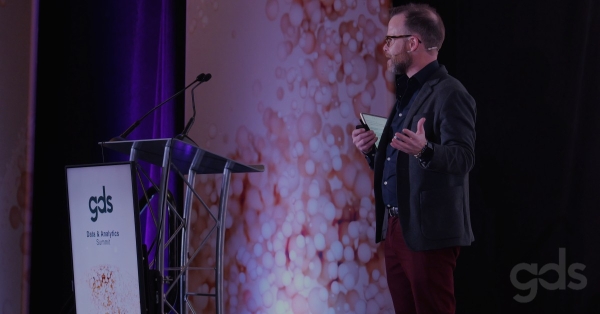
At the GDS AI Innovation Summit in Dallas, senior technology and business leaders spoke openly about the gap between AI ambition and enterprise reality. Most organizations have already experimented with AI. Far fewer have embedded it in ways that consistently drive measurable business value.
The challenge is no longer access to AI technology. It is building an enterprise AI strategy capable of scaling across people, processes, infrastructure, and operations.
What emerged across the summit was not caution. It was clarity.
Enterprise AI has moved beyond the experimentation phase. The focus now is execution.
The Pressure to Scale AI Is Growing Faster Than Operational Readiness
Most organizations no longer question whether AI matters. The pressure now comes from proving business impact.
Leaders across industries described a familiar pattern. AI initiatives move quickly at the pilot stage, but struggle to scale into operational environments. Governance lags behind adoption. Infrastructure creates friction. Teams face growing expectations without clear operating models to support them.
In many organizations, experimentation has outpaced execution discipline.
That tension is becoming harder to ignore.
Executives at the summit repeatedly returned to the same underlying issue: enterprise transformation rarely fails because of a lack of ideas. It slows down when strategy, operations, leadership, and workforce readiness fall out of alignment.
Enterprise AI Strategy Is Becoming an Organizational Capability
One of the clearest themes throughout the event was that AI transformation is no longer purely a technology conversation.
The organizations making meaningful progress are approaching AI as an enterprise-wide operating shift rather than a standalone innovation initiative.
That means creating governance models that support speed without losing accountability. It means aligning AI investments to measurable business outcomes instead of isolated experimentation. It means building organizational confidence alongside technical capability.
Culture also surfaced as a defining factor.
Several leaders spoke candidly about resistance to change, workforce hesitation, and the disconnect that often exists between executive urgency and operational reality. Successful transformation depends as much on trust and clarity as it does on technology itself.
The enterprises gaining momentum are not necessarily moving the fastest. They are building the foundations required to scale responsibly.
The Rise of the Human-Agentic Enterprise
Another major focus across the summit was the emergence of agentic AI and what it means for enterprise operating models.
Organizations are beginning to move beyond traditional automation toward systems capable of reasoning, orchestrating workflows, and acting autonomously. That shift is redefining how leaders think about accountability, governance, and decision-making.
For CIOs, the role itself is evolving.
Leadership is becoming less about managing infrastructure alone and more about orchestrating hybrid human-agent environments. The challenge is no longer simply deploying AI capabilities. It is integrating them into the enterprise in ways that remain secure, measurable, and operationally sustainable.
As AI systems become more embedded into workflows, governance is moving from a compliance function to a strategic requirement.
Infrastructure Readiness May Define the Next Competitive Advantage
While much of the public AI conversation remains focused on models and tools, many executives pointed toward a more foundational issue: infrastructure readiness.
Enterprise AI cannot scale effectively on fragmented systems and outdated operating environments.
Leaders discussed the growing importance of resilient architecture, scalable data environments, cybersecurity alignment, and operational flexibility. AI is increasing the speed of enterprise decision-making, but many organizations are still operating on systems designed for a very different pace of change.
That gap creates risk.
It also creates separation between organizations experimenting with AI and those operationalizing it successfully.
The next phase of enterprise AI transformation will likely be shaped by infrastructure as much as innovation.
Enterprise AI Transformation Is Becoming a Test of Follow-Through
What stood out most across the summit was the growing realism around execution.
The organizations making progress are not necessarily the ones running the most pilots or making the boldest announcements. They are the ones creating operational clarity, aligning teams around outcomes, and building long-term transformation capability.
AI is already reshaping customer expectations, enterprise operations, and competitive advantage. The question now is not whether organizations are experimenting with AI.
It is whether they are prepared to scale it.
Explore the Full Insight Report
The GDS AI Innovation Summit brought together senior executives across healthcare, defense, enterprise technology, customer experience, and digital transformation to discuss what it really takes to operationalize AI at scale.
Explore how leading organizations are redefining enterprise AI strategy, building governance and infrastructure readiness, and turning experimentation into measurable business impact.
Be part of the GDS Community, register your interest in out upcoming events!