
Responsible AI. The phrase itself has become a buzzword, often met with a mix of apprehension and indifference by senior business leaders. Is it a necessary evil, an arduous compliance exercise, or can it actually be a strategic advantage?
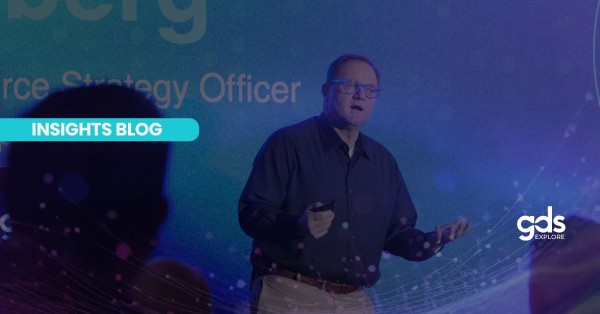
At our most recent AI Innovation Summit, the audience heard from Lambert Hogenhout, Chief AI Officer at the United Nations, as he made a compelling argument for the latter.
There is a growing trend of people becoming increasingly concerned about their data privacy and how AI is being used. For organizations that can allay those concerns, there is a real opportunity to pull ahead in the AI arms race.
A Lack of Trust
We’re all aware of the potential risks surrounding AI. With governments slowly catching up with the times, they are introducing new laws and regulations intended to mitigate these risks.
Now hamstrung by compliance challenges, the stage is set for AI to revolutionize business, right? Unfortunately, there is still a hurdle to be overcome. Trust.
Both customers and staff are still wary of AI. “Where is my data going?” “Will I lose my job?” A recent study by Forrester found that where AI had been incorporated into business processes it had resulted in the humans being less motivated, less effective, and losing trust in the system.
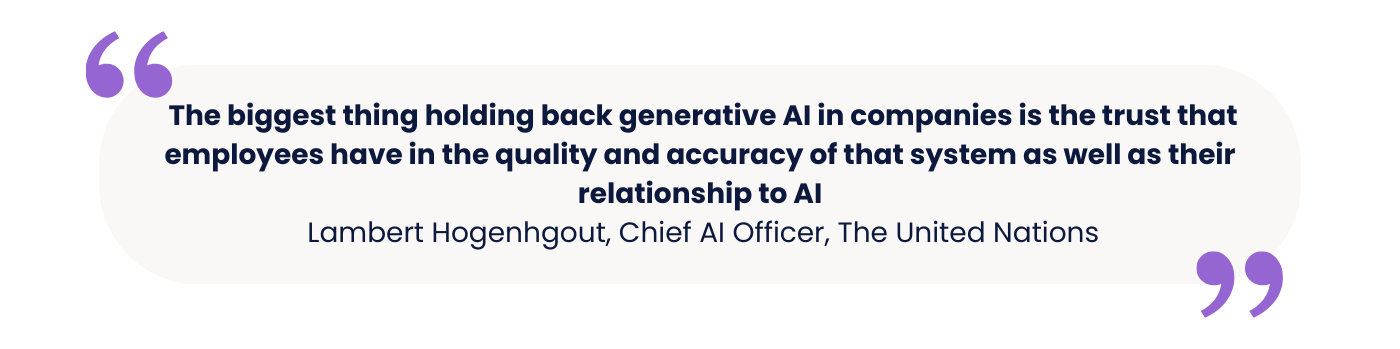
So, it stands to reason that companies that prioritize ethical AI practices, demonstrate transparency, and build trust with their customers and employees can gain a significant edge in the market.
What is Responsible AI?
According to Lambert, responsible AI has three components.
Controls
Establish rules and guidelines for AI usage within your organization. These rules help to prevent risks like IP violations, data leakage, and malfunctioning. Nobody wants to be the next Air Canada…
Alignment
Ensure AI practices align with company values. Whether it’s regulatory, culturally, or internally, alignment on AI prevents discrimination and customer dissatisfaction.
Transparency
Be open about how your AI systems are used, addressing both internal distrust and public concerns. This is how you begin to build trust.
People are quick to jump on responsible AI from a control and alignment perspective but often forget to address transparency. But by hitting all three and beginning to build trust, organizations can start leveraging that trust strategically.
Responsibility as Strategy
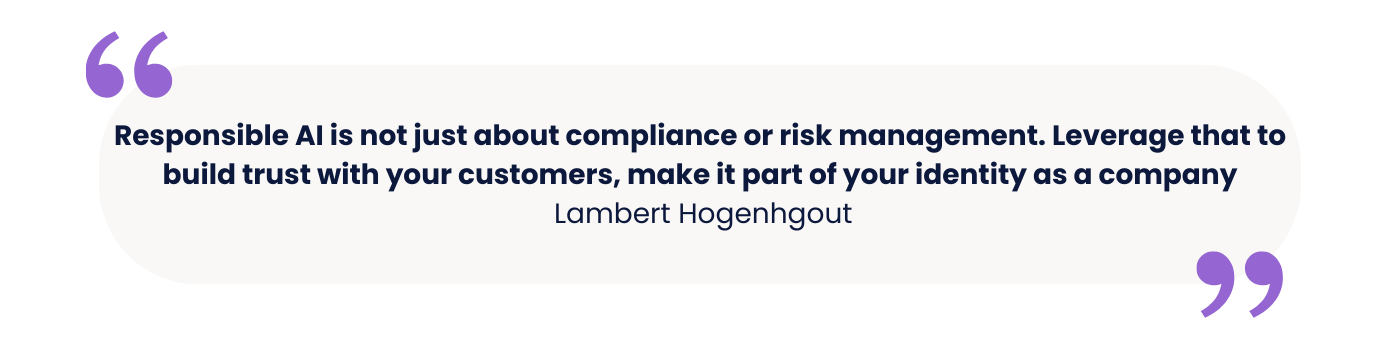
If you can position your organization as trustworthy, you can strategically differentiate yourself from others. In a world with a growing distrust of AI, coming out strong from a trust and transparency perspective can make all the difference.
According to a McKinsey QuantumBlack report on AI, only 18% of organizations have an enterprise-wide council or board with the authority to make decisions involving responsible AI governance.
With so few orgs leveraging the value of responsible AI as a strategy, there is space for organizations to position themselves as frontrunners in trustworthy AI.
Implementing Trustworthy AI
Start by defining your company’s values and approach to AI. Next, set out a framework with clear policies, methodologies, and robust training programs. This will allow your teams to understand not only what they have to do and how to do it, but why they are doing it.
Once your AI strategy is up and running, work to understand how responsible AI can become part of your brand. Look for strategic opportunities to enhance your brand image, build customer trust, and attract top talent by demonstrating your commitment to ethical AI practices.
From a technological perspective, responsible methodologies and regular audits ensure ethical AI practices are embedded throughout the organization. Look at the technology you’re designing and interrogate how it can be improved from a responsibility perspective.
Setting up AI isn’t a fire and forget situation, take the time to regularly test your systems and get feedback to understand how it’s being used in practice.
Moving Beyond Compliance
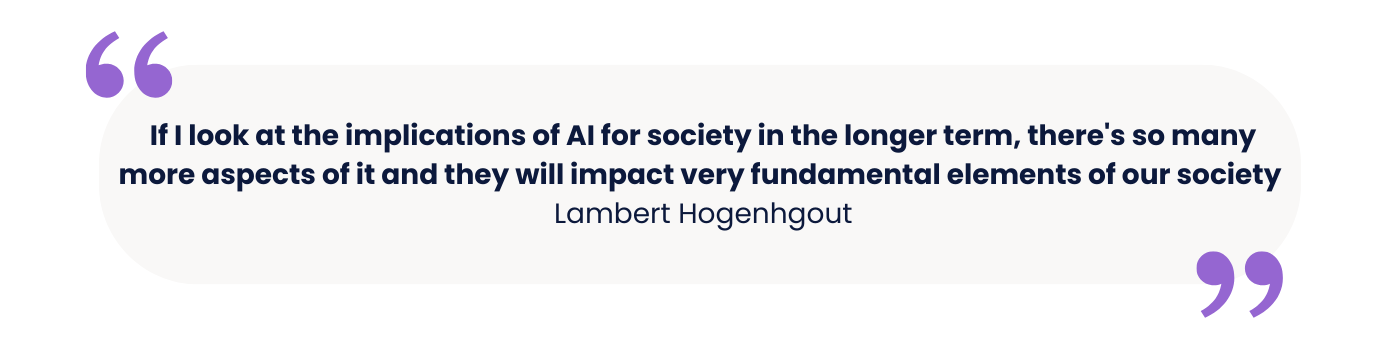
Responsible AI is not just about avoiding legal trouble, it’s about shaping the future of AI in a way that benefits humanity. This requires proactive engagement from all stakeholders.
Responsible AI is dynamic. Where initially focused on bias and discrimination, it’s broadened to consider complex societal impacts, such as identity, authenticity, and trust.
Responsible AI is not a hassle; it’s an opportunity. By embracing ethical AI practices, businesses can not only mitigate risks but also gain a competitive advantage, build trust with stakeholders, and contribute to a more just and equitable future.
To hear more from industry leaders like Lambert on the challenges that matter most to your industry, make sure you check out our upcoming AI Innovation summits.