Events are now a cornerstone of marketing leaders’ strategies, driving significant attention and investment.
According to our report, Evolving horizons: The future of pipeline generation, a staggering 93% of sales and marketing leaders are ready to harness the power of events in 2024 – proving the value that global leaders are placing on events this year and beyond.
It’s clear this immense value is not without reason – this is shown in our article 5 reasons events are your secret weapon for shortening sales cycles, highlighting their unique ability to serve as a direct channel for reaching target decision makers.
However, the landscape of event marketing is not static; it evolves continuously in response to economic shifts, technological advancements, and evolving attendee preferences. To remain competitive and maximize the impact of their events, it’s imperative for marketers to stay ahead of the trends shaping the events industry.
So, what are the trends that can elevate your events to the next level? Join us as we explore the key trends shaping the future of event marketing strategies that every marketer needs to know, providing insights and strategies to navigate this dynamic landscape effectively.
The renaissance of face-to-face engagement
Following a series of digital-first years, the resurgence of in-person experiences in 2024 comes as no surprise. According to our report, in-person events are set to receive the greatest investment in 2024, with 40% of senior executives stating that they will be investing in in-person events.
These face-to-face experiences facilitate deeper connections, allow direct access to target decision makers, and ample opportunities to engage in conversations that can deliver immediate value. You can see this in the fact that meetings, in-person events, and direct selling were revealed to be the three channels that have driven the most pipeline in 2023 – demonstrating the power of human connection in generating business.
The value of in-person events extends beyond mere preference; it’s rooted in trust and authenticity. According to the Freeman Trends Report Q1 2024, a resounding 82% of attendees express a preference for in-person gatherings.
Moreover, in-person events are seen to be the most trustworthy source of information. This may not be surprising considering the increasing amounts of misinformation surfacing on the web and concerns surrounding the rise in AI-generated content.

The shift towards prioritizing human connection in events is further echoed by industry experts. During our event, Reimagine: The future of pipeline generation, Liza Adams, AI Advisor & Fractional CMO, GrowthPath Partners, shared her insightful thoughts on the shift towards human connection:
“There’s this digital hunger paradox: The more we engage digitally, the more our yearning is for human connections. So those companies that can continue to elevate human value will be rewarded.”
Tim Cassidy, Presenter and Editor, GDS Group, also shone a light on the value of human connections and relationships that in-person events can facilitate. He highlighted the importance of side conversations during networking events and emphasized that “what these executives are saying is, we’re so glad to get back to in-person events because they’re establishing relationships with their peers.”
Maximizing event impact with data-driven insights
As we emphasise in our report, Evolving horizons: The future of pipeline generation, events can achieve key outcomes in sales and marketing. Senior executives highlight the following as their foremost objectives for events:
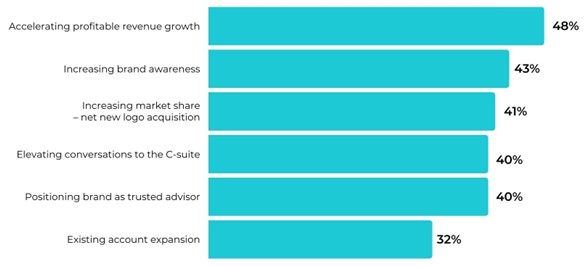
However, how can senior marketing executives achieve these outcomes, and how can they measure their impact?
Preparation is paramount, as we stress in our article, 5 reasons events are your secret weapon for shortening sales cycles. Establishing clear objectives and understanding the needs of potential customers beforehand enables teams to enter conversations at events well-prepared.
Yet, preparation alone is insufficient without effective measurement of outcomes. Ruth Connor, CMO & Business Trainer at Coface, discusses this in 5 key lessons from marketing leaders, “having a shared outcome is key. What gets measured, gets done”.
Key measurements such as revenue generation, lead generation, attendee satisfaction, and social media interest, as the Amex GBT 2024 global meetings and events forecast highlights, provide valuable insights into event success.
They also highlight that there’s an abundance of data available to marketing leaders, however with all this data, it will be important to focus on analyzing the most valuable metrics that relate directly to your outcomes.
The Freeman 2024 Exhibitor Trends Report highlights lead generation as the most important event component for vendors and sponsors. However, they also note that lead generation shouldn’t be left solely up to the vendors. Event organizers should serve as a bridge between vendors and attendees, facilitating mutually beneficial relationships between them.
Therefore, working alongside event providers who understand the needs of sponsors and attendees will also be hugely beneficial in event marketing.
By leveraging data effectively and working with event providers, marketers can unlock the full potential of events and drive meaningful outcomes for their businesses.
Embracing technological innovation
In the rapidly evolving landscape of event marketing, leveraging cutting-edge technologies is not just advisable—it’s imperative for staying ahead of the curve. Cvent’s Top 10 Meeting and Event Industry Trends for 2024 underscores the significance of integrating new technologies, such as AI, with existing MarTech systems to enhance event experiences and drive measurable results.
However, it’s the rise of artificial intelligence that truly marks a paradigm shift in event marketing. Organizations are increasingly adopting AI to revolutionize their event strategies. The Amex GBT forecast emphasizes that 42% of marketers expect to leverage AI in events in 2024.
Eventex 2024 Events Industry Trends Report indicates that AI is anticipated to exert influence across various aspects of events, from pre-event audience targeting and event planning, to post-event data analysis and communications. They also emphasize Generative AI’s ability to support creative processes, as well as AI’s role in personalization – a key use case for AI in the marketing landscape.
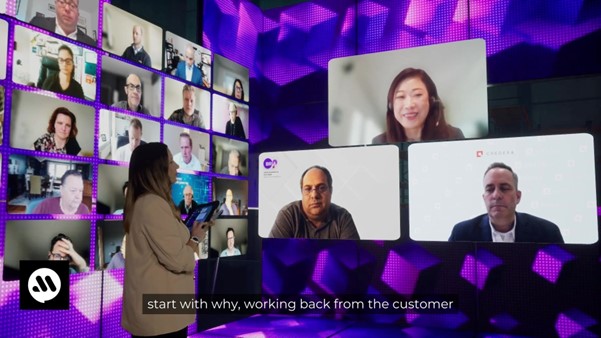
Our event, The power of AI in modern marketing, echoes this sentiment, with Helen Xing, Data Partner GTM at AWS, stressing that marketing strategies, events or otherwise, must centre on understanding and catering to customer needs and preferences. She says that when implementing AI, it’s best to “start with why, working back from the customer”.
To wrap things up
Events have become as indispensable tools for driving business growth, fostering genuine connections, and achieving key objectives. The overwhelming intent of sales and marketing leaders to invest in events underscores their enduring value.
As we navigate the evolving landscape of event marketing, one thing remains clear: staying ahead of trends and embracing innovation is essential for success.
Research shows that three of the key trends senior marketing executives must embrace include harnessing the power of in-person engagements, leveraging data-driven insights, and embracing cutting-edge technologies.
Looking to elevate your event strategy?
At GDS Group, we’re firm believers in the power of events. Discover how you can use events to reach target decision makers, generate attributable pipeline, and increase brand awareness.
Experience the impact of our event experiences and kickstart your journey with GDS Group today.